The Biggar Picture

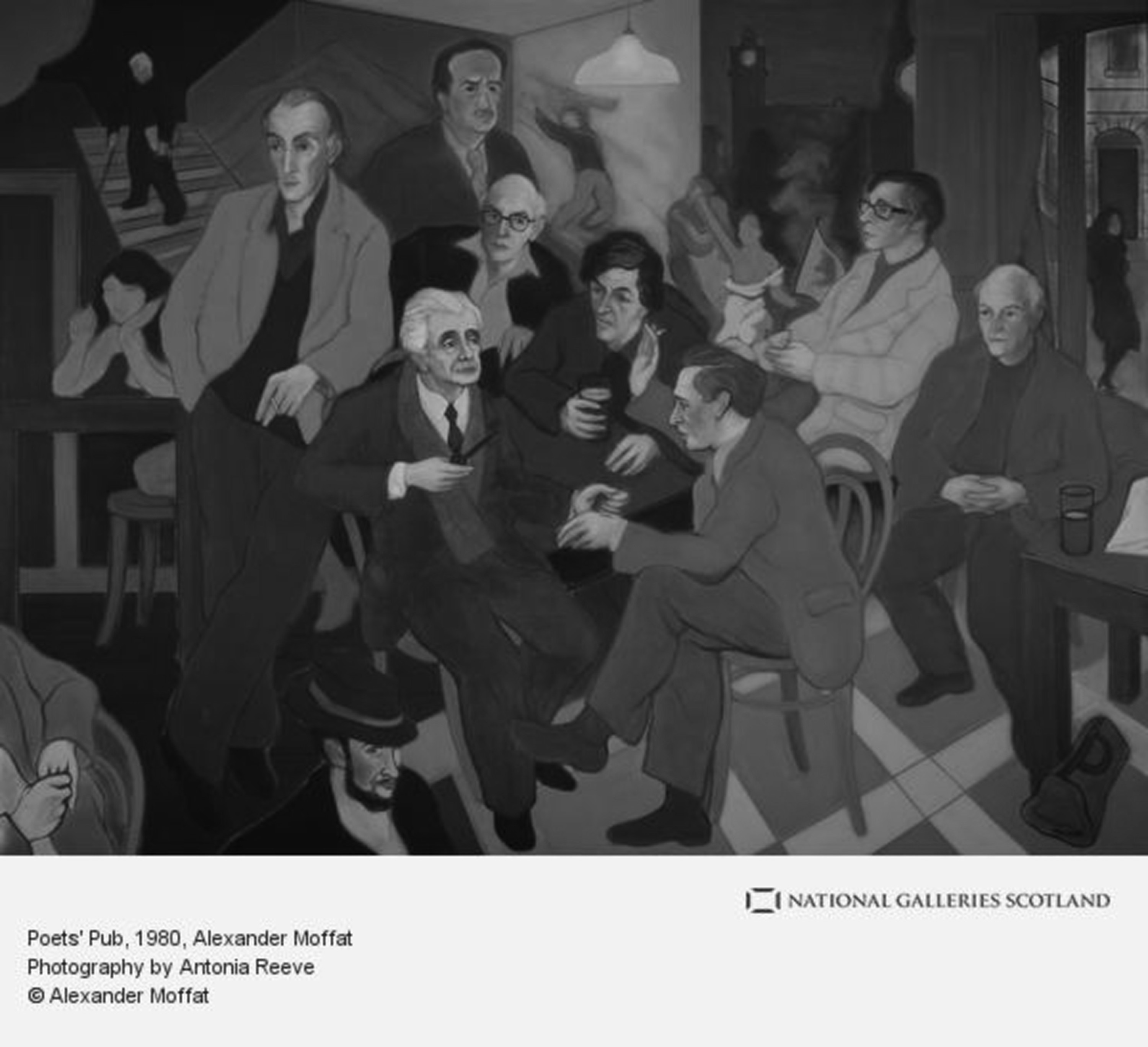
There is a painting in the National Gallery of Scotland by Alexander Moffat called The Poet’s Pub.

It was created in 1980 and features Norman MacCaig, Sorley MacLean,Ian Crighton Smith, Hugh MacDiarmid, George Mackay Brown, Edwin Morgan, Sydney Goodsir Smith and Robert Gariock.

A grand constellation of Scotlands poetic stars of the time.

It’s possible, if you fancy breathing the air around some of the landscapes which were important to the characters in this painting, to use it as a travel guide through some of the most fascinating places in Scotland.

If you’re looking at the painting you’re in Edinburgh where Sydney Goodsir Smith lived after his family moved from New Zealand and it was here that Robert Garioch was born.

A short hop east and you’re in Glasgow with Edwin Morgan.

If you head north and reach Orkney you can spend time with George Mackay Brown before heading south to visit Norman MacCaig in Assynt and Sorley MacLean around Skye.

You might call in on Ian Crichton Smith who lived in Oban for a while before reaching the centre of the painting.

Here, in the middle, Alexander Moffat places Hugh MacDiarmid as the fixed point around which the other poets circulate and Hugh MacDiarmid can be found in Biggar.

A warning should be applied to any travel based on romantic notions from the past, however. It might still be possible to enjoy history and heritage by visiting castles and gardens, but when it comes to exploring what it was in the landscape that energised poets to write about it, things get a little more tricky.

And when it comes to politics, as it so often did for MacDiarmid, the social landscape might be changed beyond recognition.

Of all the poets gathered in Alexander Moffat’s painting perhaps only George Mackay Brown might still be smiling in the 21st Century. His love was the story of Orkney, the saints, the Vikings, the tradition and the continuity.
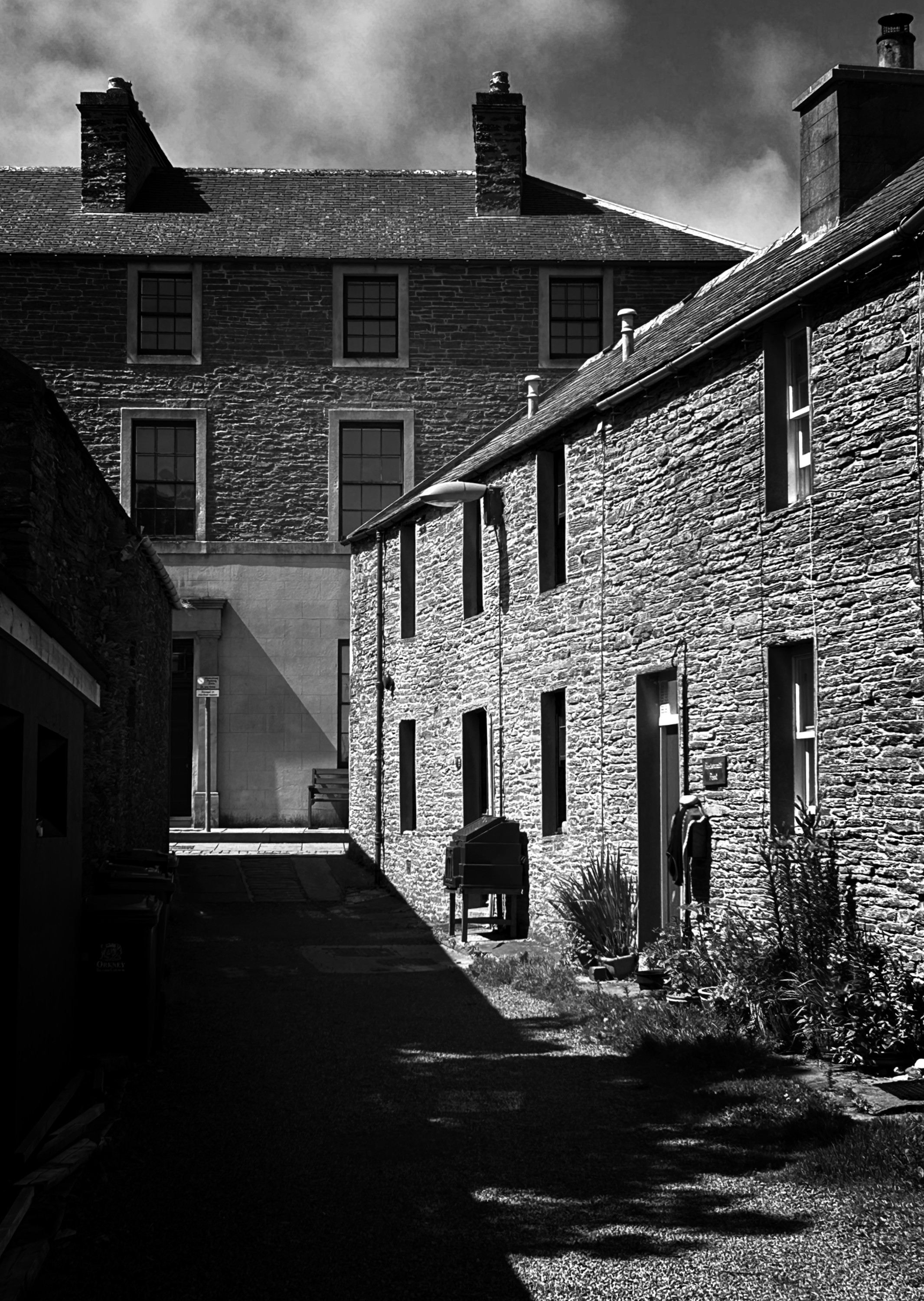
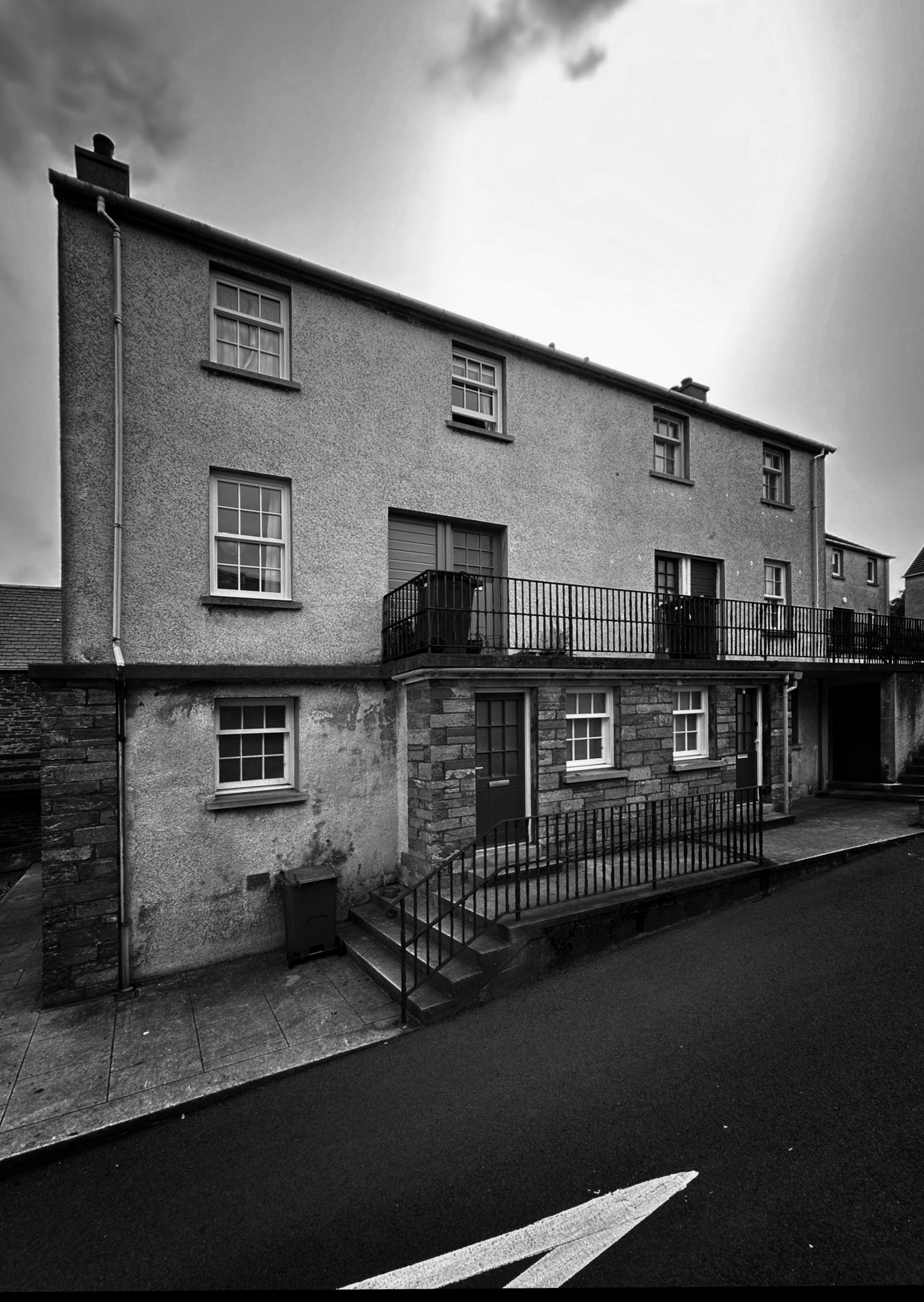
Stromness. The end of terrace house where George Mackay Brown was born in 1921 and the apartment (upper left) where he died in 1996.

Those things are an industry now but they are being explored in great detail and Mackay Brown would probably be fascinated. Their power and mystery are being enjoyed by thousands every year. The stories he told of his home place can be touched now and wondered at.

He might even have enjoyed listening to the tales of some of the tourists who stream from the cruise ships which lumber into Scapa Flow and clog the arteries of Kirkwall and Stromness.

He liked to listen to people over a pint but he would have to organise himself around the difficulty that his bar of choice, The Flattie, at the side of the Stromness Hotel, is closed and used now as a storage place for drones which might, one day, deliver goods from island to island across the archipelago.
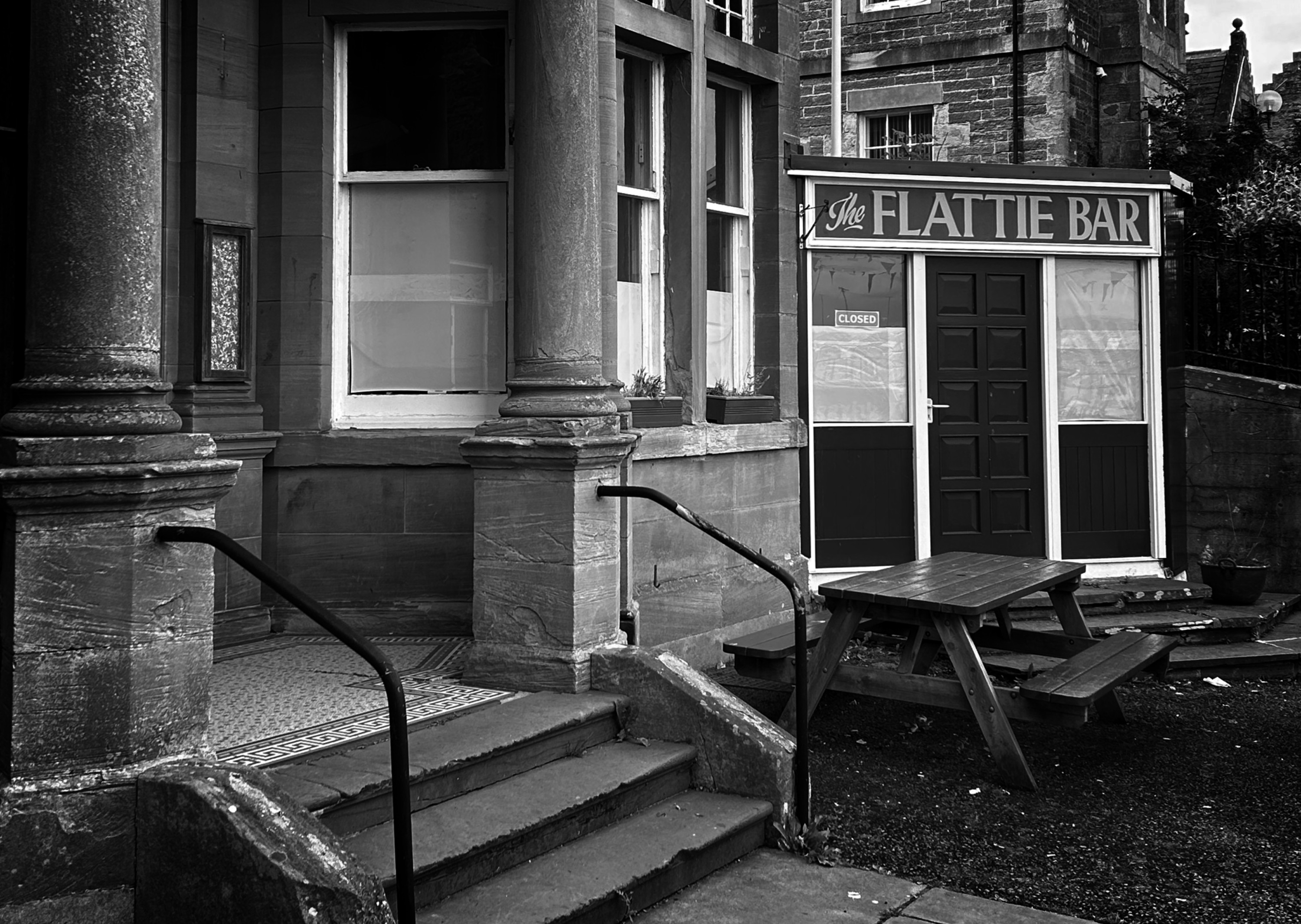
The Stromness Hotel.

He would also have to come to terms with the fact that The Stromness Hotel is dry again despite his campaign in 1945 to introduce pubs into what was then a dry town.

What he might find more troubling is the popularity of Hoy.

The ferry to the island is booked days in advance and the onetime solitude of Rackwick is largely gone.

Mackay Brown and his friends, the painter Sylvia Wishart and the composer, Peter Maxwell-Davis, had a particular love for Rackwick. Maxwell Davis lived there because of its solitude.

Solitude and mass tourism are bad bedfellows.

The same phenomenon exists as you travel south along the west coast of mainland Scotland to Assynt with the poems of Norman MacCaig in your hand.

MacCaig holidayed in Assynt with his family and was enthralled by it.
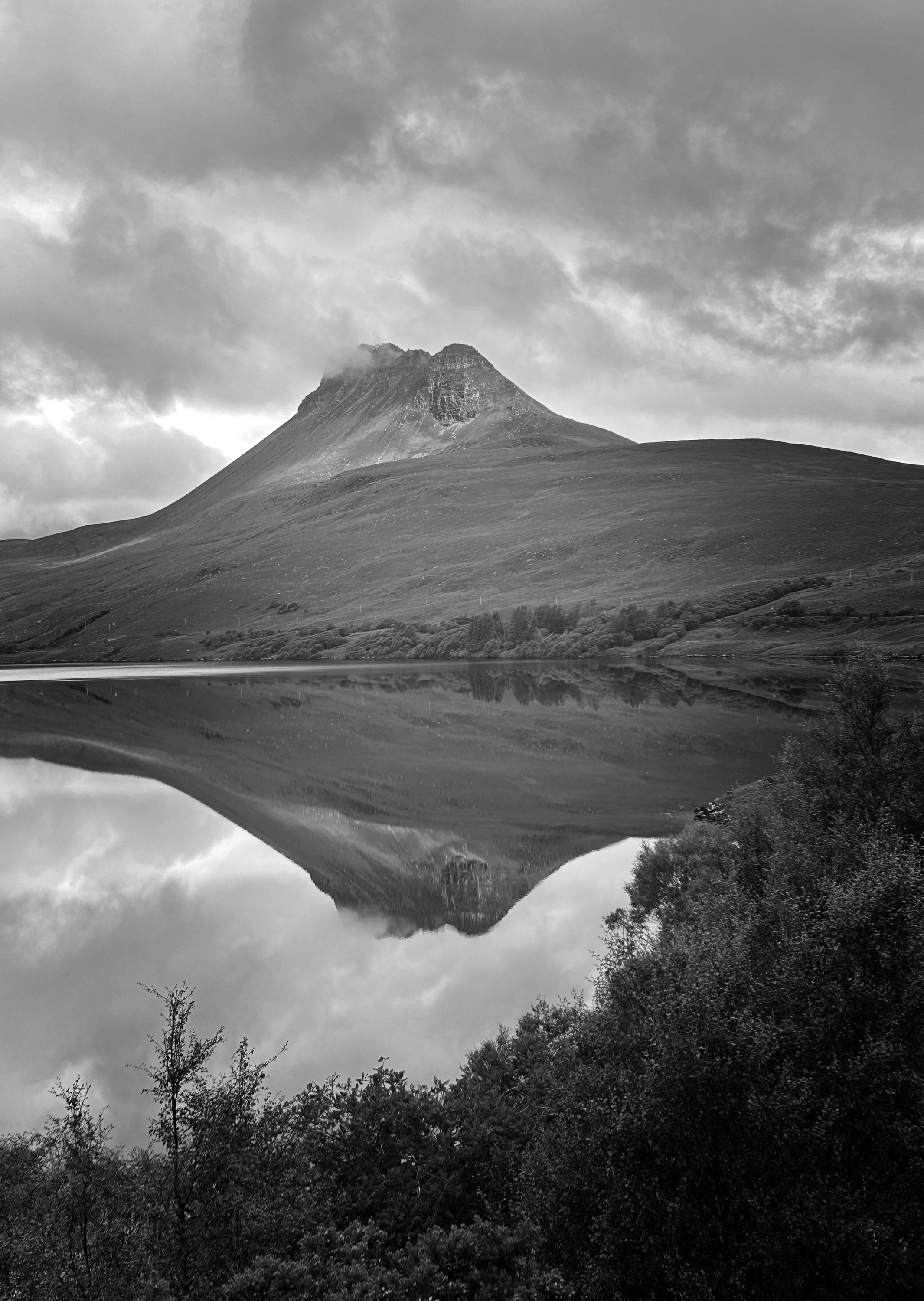
Stac Polliaidh. Assynt.

Before he began to stay at Inverkirkaig, MacCaig spent summers in Achmelvich which is reached down a steep single track road terminating at a beautiful white sanded crescent beach.

A hut used by children as a big nature table full of drawings and shells and rocks once stood in front of the beach on an open space of grass.

Today, people play volley ball and light fires on that beach and the children’s shed is gone.

There has been a campsite at Alchmelvich for some time but it has expanded and has become much more popular. The problems with drainage in such a remote area are hinted at by smell here and there.

The land which runs down to the beach is a building site just now. The infrastructure of a very large car park, along with another campsite to join those which are already there and the North Coast 500 Pods which service travellers along that ever more busy route, is under construction.

The scars of building work will heal over time but what remains will welcome more and more people. The access is still steep and single track.

In 1967 MacCaig wrote, in ‘A Man In Assynt’;

‘Who possesses this landscape? –

The man who bought it or

I who am possessed by it?’

The question is, now, much more difficult to answer.

The man who bought it has developed it and thousands of people, every year, will find beauty in it, but not all of them are likely to have the same emotional connection MacCaig experienced.

It’s difficult to deny that tourism has, to a large extent, adversely affected the intrinsic lure of these remote places.
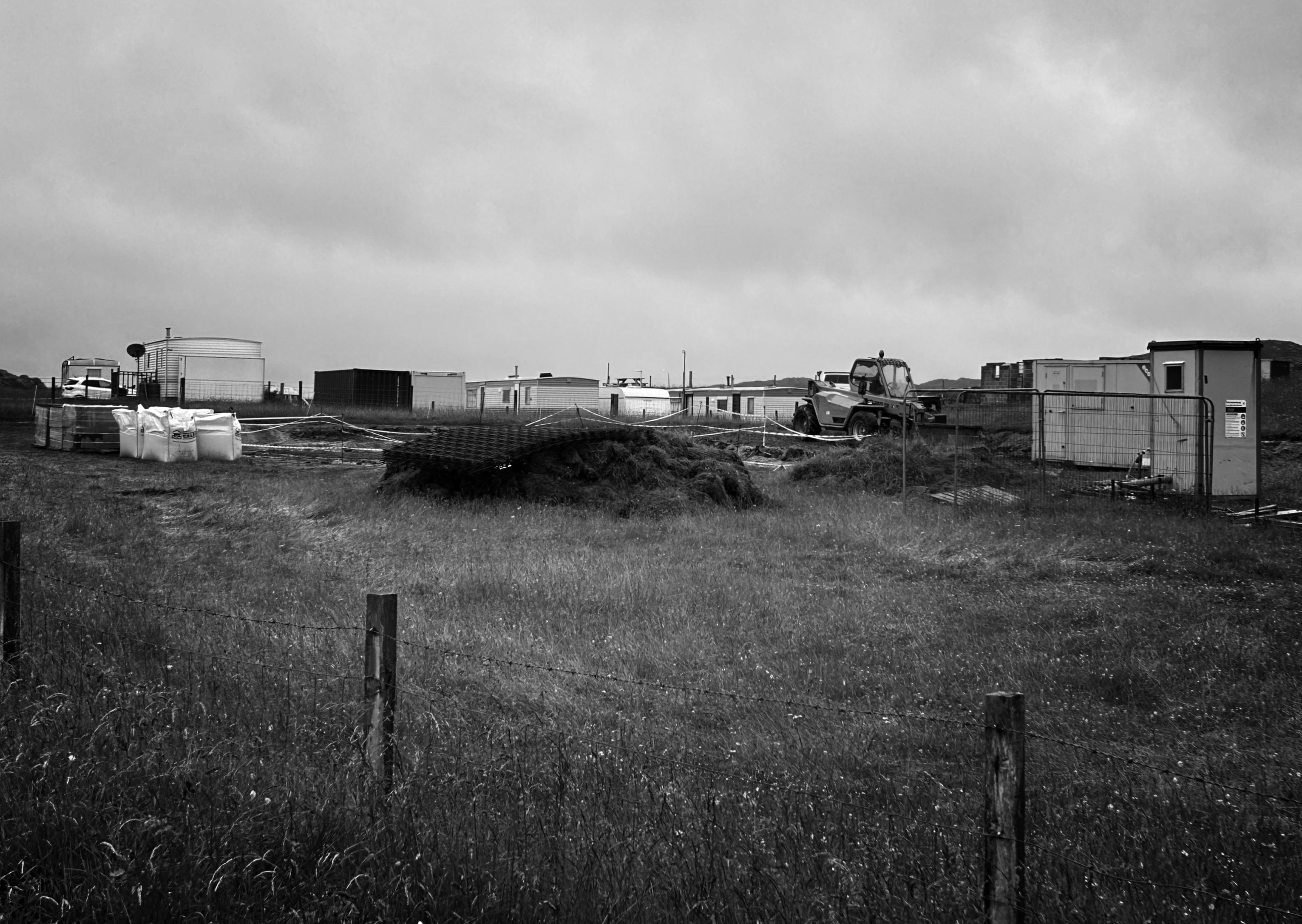
Achmelvich, Assynt.

MacCaig was a city man, working and writing in Edinburgh, who visited a place which was so remarkable to him that it possessed him.

Sorley MacLean lived and worked inside the landscape which possessed him. Born on Rassay and living in Skye and Plockton, he knew the landscape intimately.
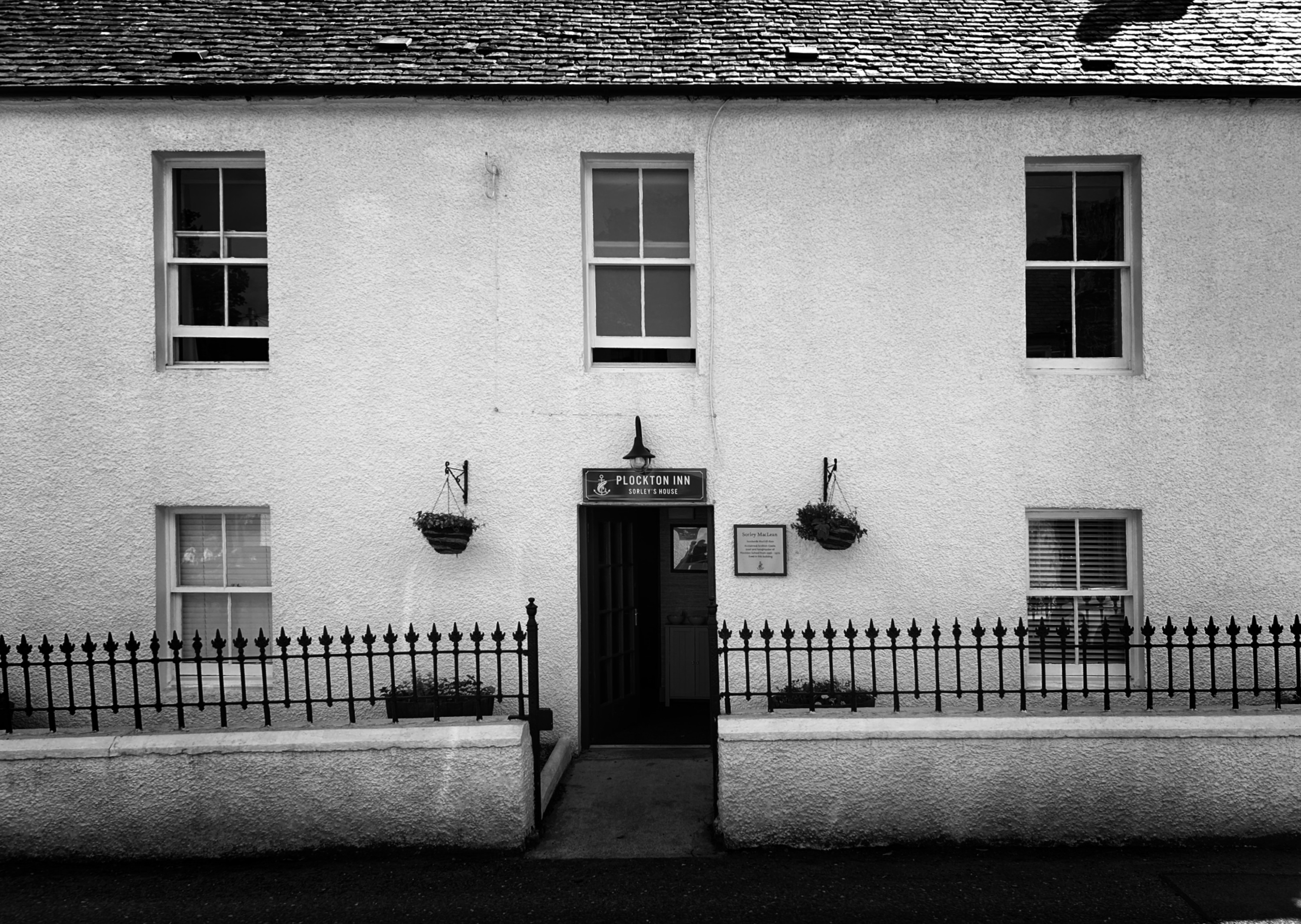
Sorley MacLean’s house, Plockton.

His poetry, written in Gaelic, penetrates deep into what was once an isolated place over which he laid international concerns.

The bridge connecting Skye to the mainland consigned that isolation to history and, like Hallaig, MacLean’s famous deserted Rassay village, the old was swept away.
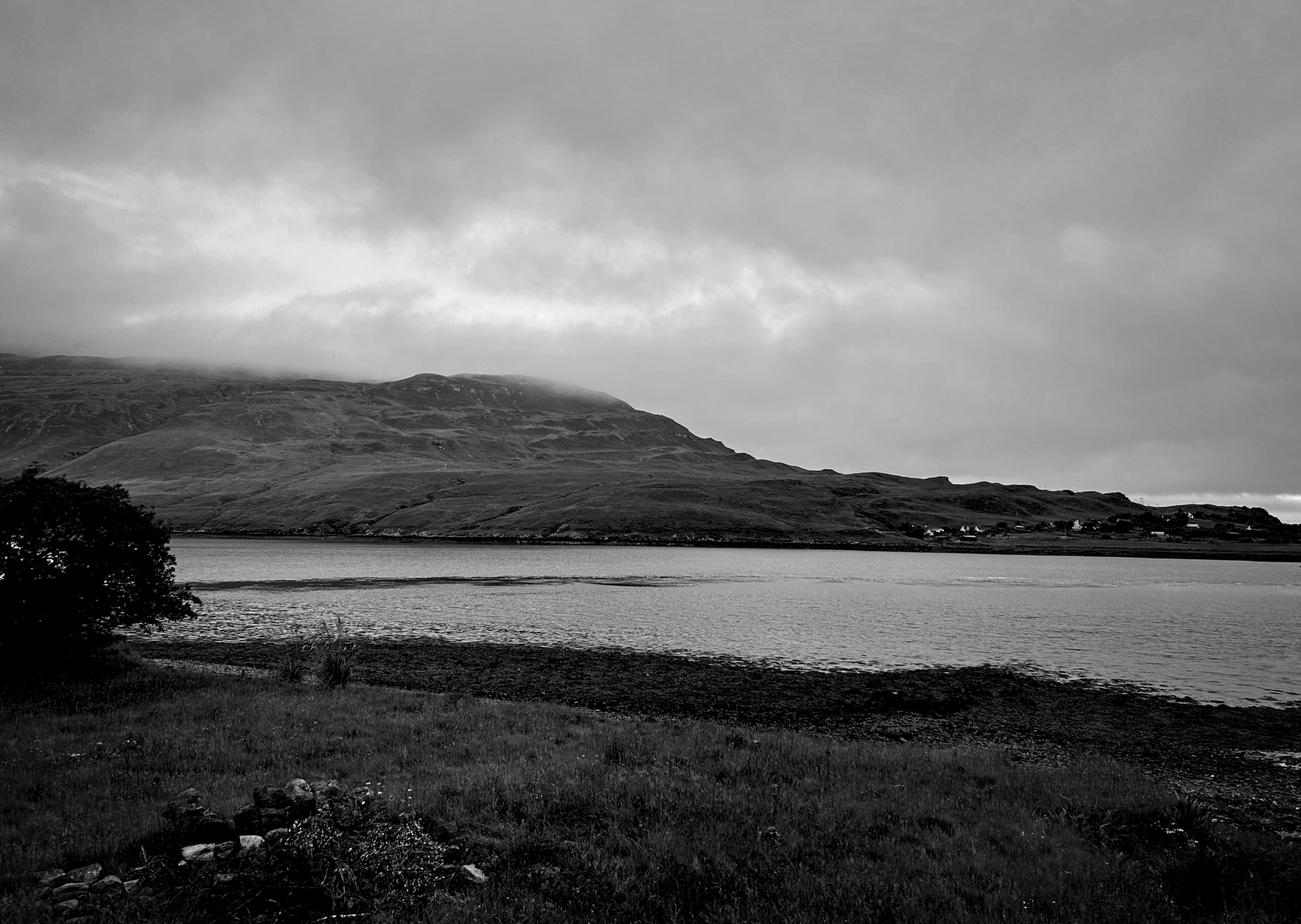
Rassay from Skye.

There may be a stark economic truth in the argument that without the income generated by tourism the northwest of Scotland would die.

Young people would leave through lack of work and decay would be inevitable.

Progress is built into survival and environmental compromise is the price.

So far the poets from Alexander Moffat’s painting might lament that what possessed them and enlivened their writing has been damaged by too much attention.

It’s only when you get to Biggar that your heart is saddened by the consequences of too little attention.

Until the onset of the Covid pandemic in 2020 Hugh MacDiarmid’s Brownshill cottage in South Lanarkshire was ticking over as a fitting reminder of this important writer.
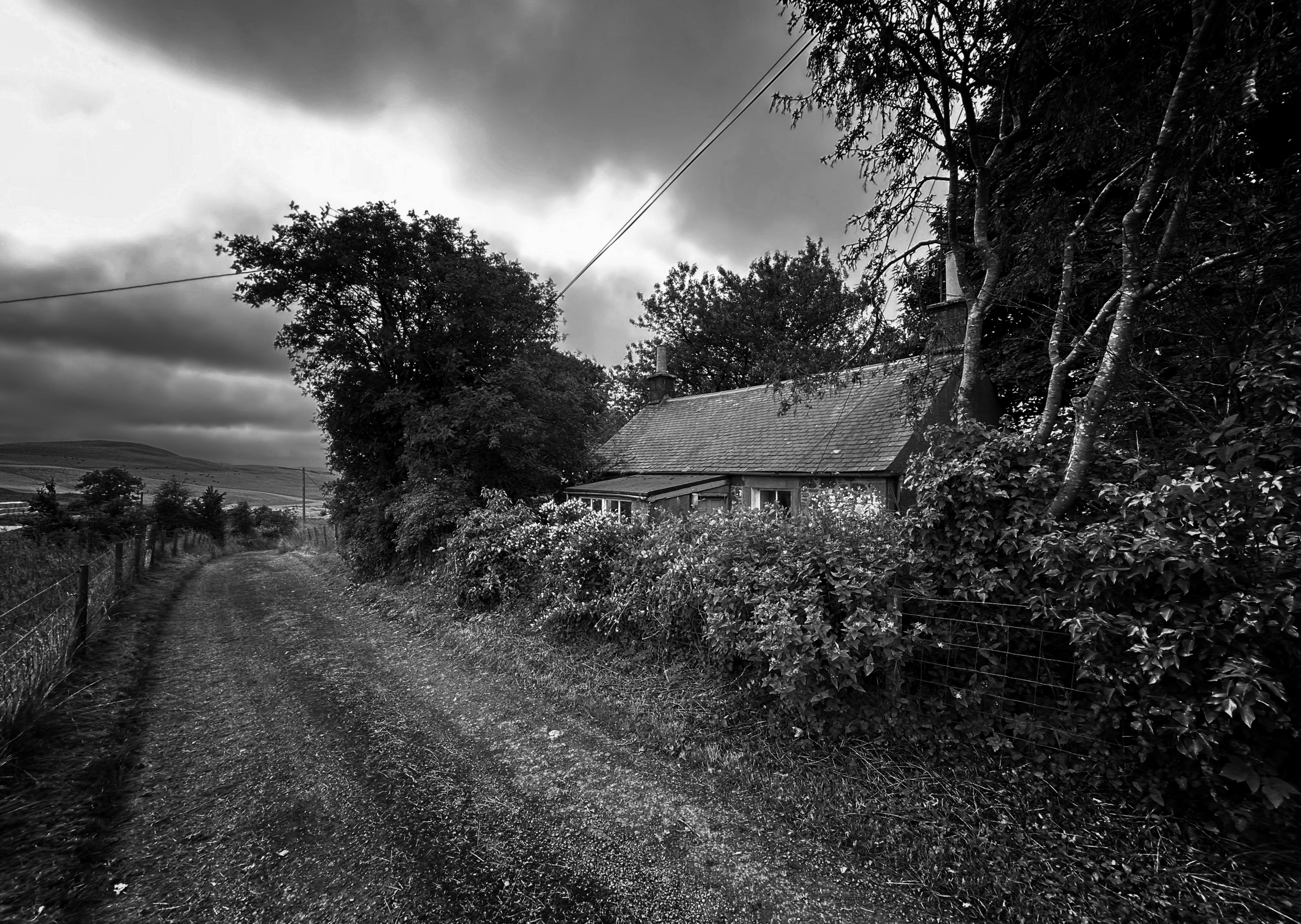
Furniture and memorabilia left after the death of the poet and the later death of his wife, Valda, were still in place and a series of important writers’ residencies had taken place in the building.

Since Covid, and the drying up of appropriate financing, Brownsbank has slid into decay and decline.

A fine and energetic charity, MacDiarmid’s Brownsbank, has struggled to preserve the building and fund its resurrection.

For some reason this task has proved to be a steep uphill struggle.
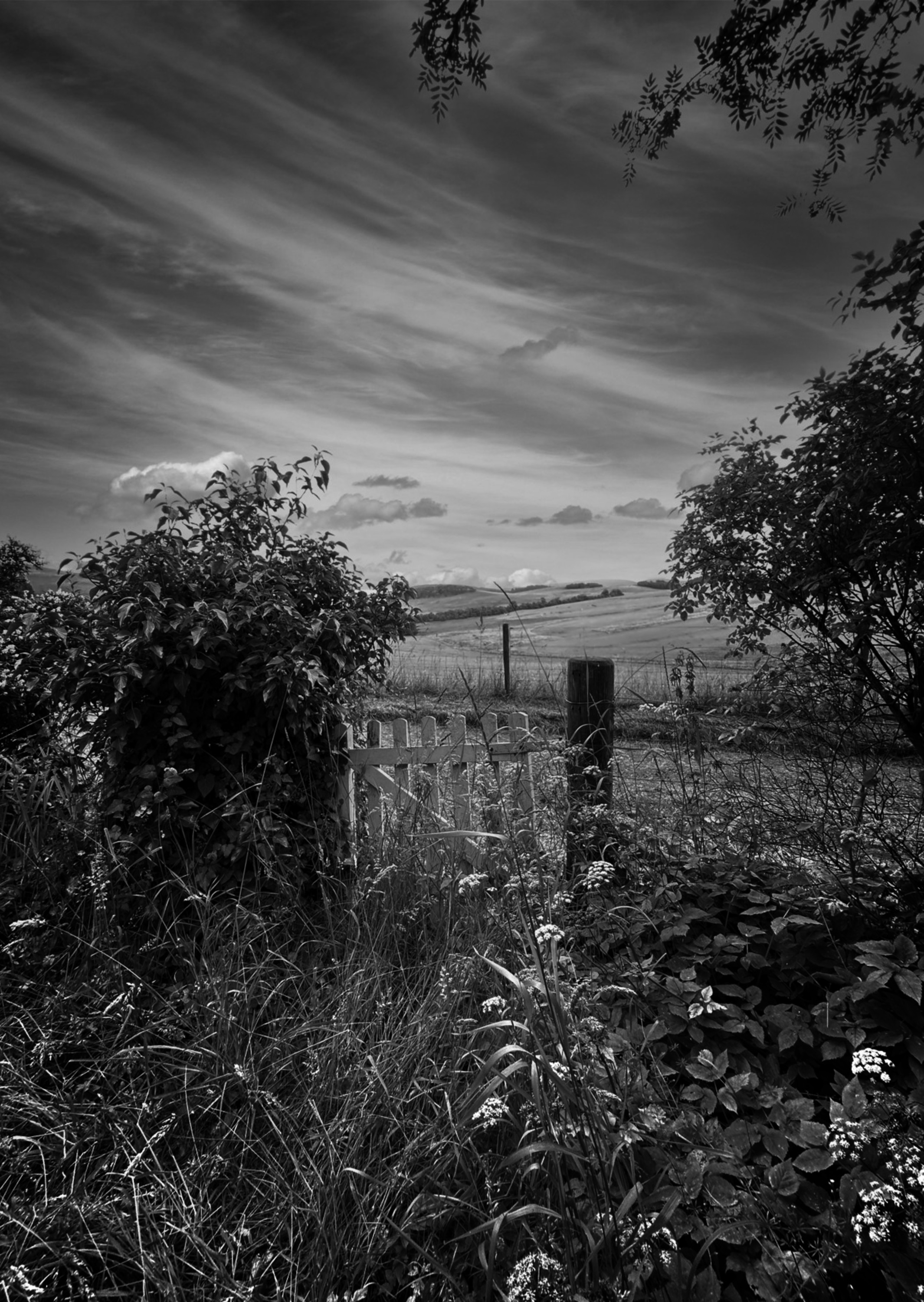
If you stand by the little blue gate in front of Brownsbank it might be interesting to reflect on why there might be a celebratory George Mackay Brown trail in Stromness which speaks of his work and points out every feature in the town with any connection to the poet.

You could also smile at the pub in Plockton which has turned Sorley MacLean’s house into a B and B but, nevertheless, has placed a proud sign, ‘Sorley’s House’ above the front door.

You might scratch your head and wonder why Brownsbank, this major reference to Alexander Moffat’s central figure, is slowly disappearing.

MacDiarmid was hugely important to what became known as the Scottish Renaissance which sought to imbue modernism with a particularly Scottish cultural flavour.

It celebrated traditional influences and addressed Scotlands declining use of regional languages.

Under his given name, Christopher Murray Grieve, he began an exploration into a language form known as Synthetic Scots, or Lallans, built from regional languages together with words culled from Jameson’s Dictionary of the ScottishLanguage from 1808.

Norman MacCaig was fond of saying that Chris Grieve plunged into Jameson’s dictionary and Hugh MacDiarmid came out of the other end.

MacDiarmid became a major player on the international stage and visitors to Brownsbank ranged from Seamus Heaney to Allen Ginsberg. Yevgeny Yevtushenko visited with his girlfriend and MacDiarmid met and compared missions with Shostakovich.

By any standards he was an important artist. To many he was a Titan who was the most important Scottish poet of the 20th Century. In fact he is widely seen as the most important Scottish poet since Burns.

But – he was outstandingly difficult as a political thinker and he did think about politics a lot.

That he wrote not one but three long poems entitled ‘Hymn to Lenin’ indicates that he was never going to inhabit safe middle ground.

He had a brief flirtation with Fascism which, until the rise of Mussolini, he felt had considerable left wing potential.

He had an unfortunate record of saying that a German victory in the war might not be as bad for Scotland as continued English dominance.

He, at various times, championed Communism and Nationalism. He was co-founder of the National Party of Scotland from which he was expelled because of his Communist sympathies and he was a member of the Communist Party for whom he stood as Parliamentary candidate against Conservative Prime Minister Alec Douglas- Home in Kinross and Western Perthshire during the 1964 election.

He was expelled from the Communist Party because of his nationalist sympathies.

Following his political thoughts is like riding a rollercoaster but at every twist and turn they are imbued with a deep and revolutionary humanity which challenges everyone to try harder to make the most civil, and proudest, civil society possible.

Burns too, a not too distant neighbour in Dumfriesshire, penned lines which navigate towards a better way of being.

When he looked toward a time when … ‘Man to Man the warld o’er shall brithers be for a’that…’ his sentiments were taken to hart, chipped into stone and memorialised alongside the carefully preserved places where he was born, farmed and died.

There are statues to be found in odd places where he might have stopped to think and there might, one day, even be a route to the site where he disturbed a mouse.

When you get to Biggar, you might take some lines from MacDiarmid’s ‘Drunk Man Looks At The Thistle’ from 1926 with you…

‘And let the lesson be

to be yersel’s,

Ye needna fash if it’s to be ocht else.

To be yersel’s

and mak’ that worth being’

No harder job to mortals has been gi’en.’
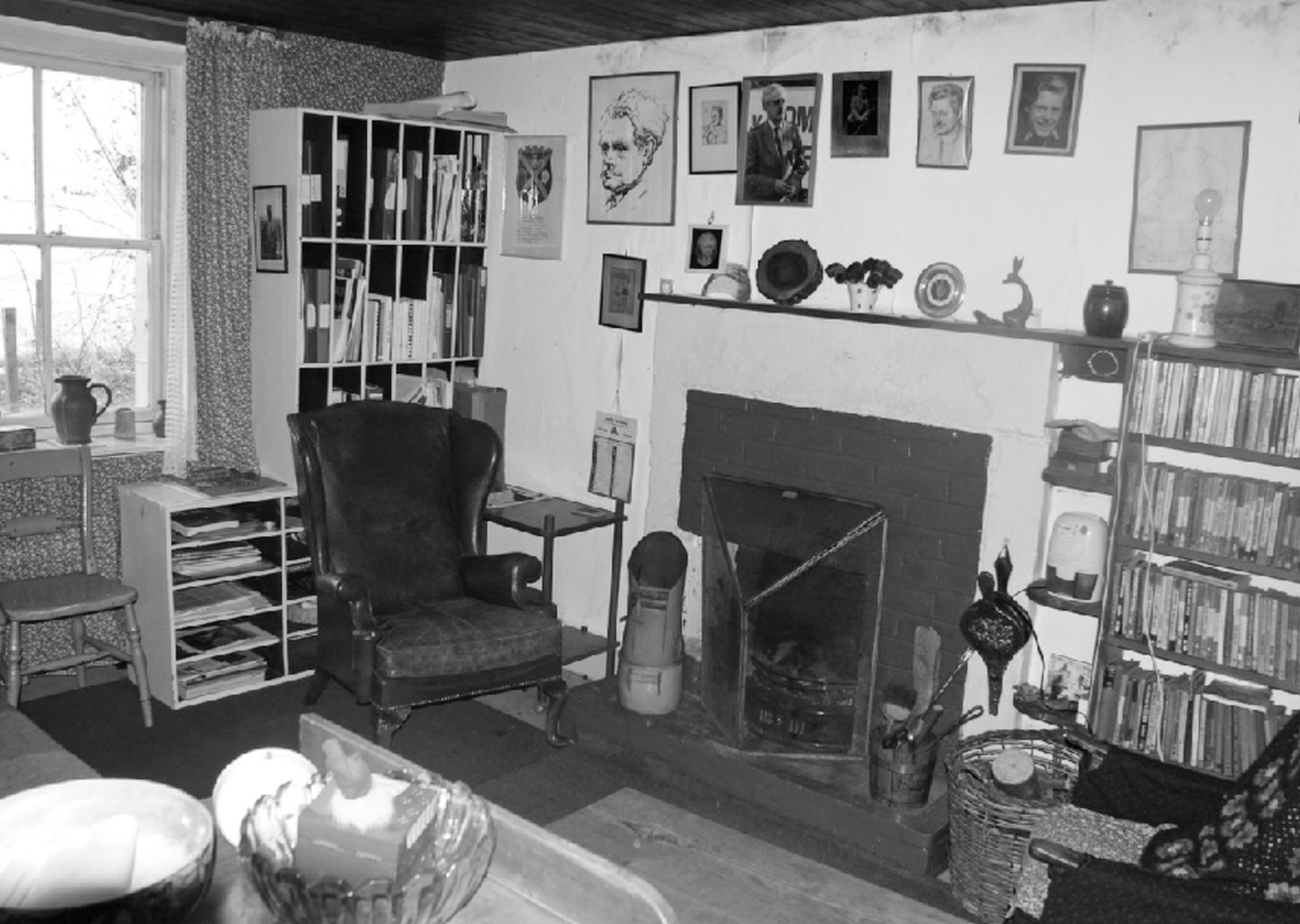
Chris’s Room (Christopher Murry Grieve). Thanks to MacDiarmid’s Brownsbank.
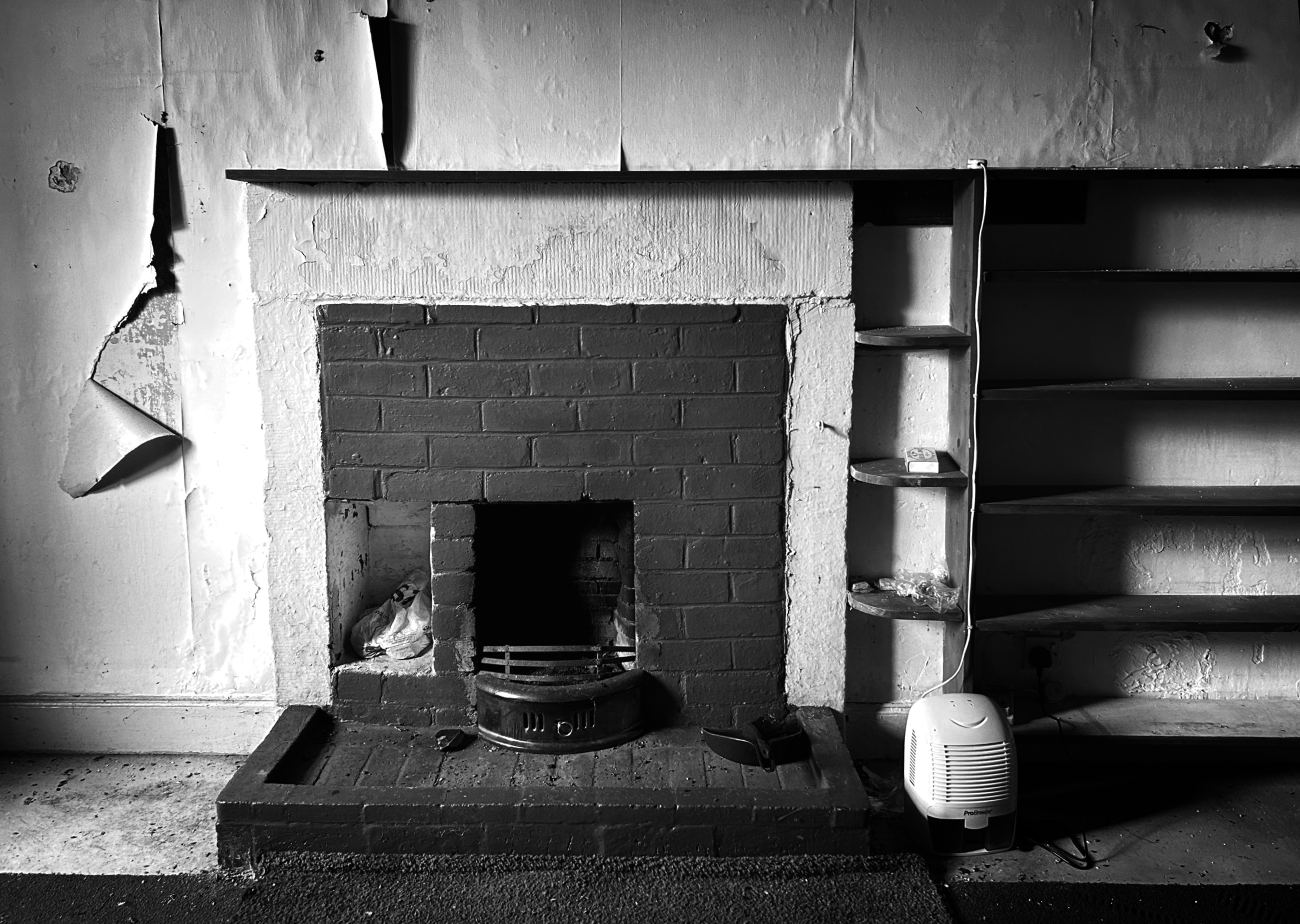
Chris’s Room 2024.
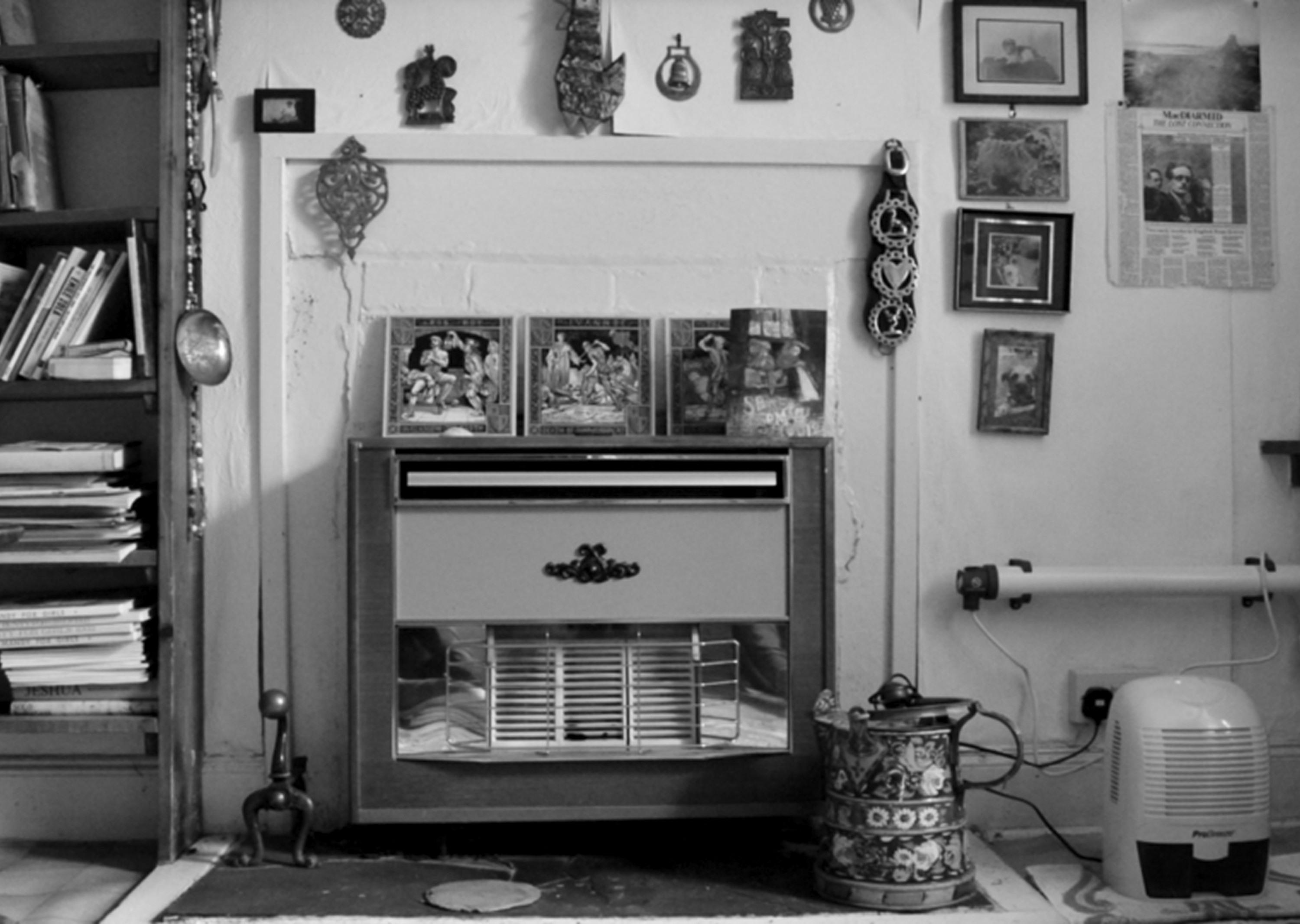
Valda’s Room, (Valda Trevelyn Grieve). Thanks to MacDiarmid’s Brownsbank.
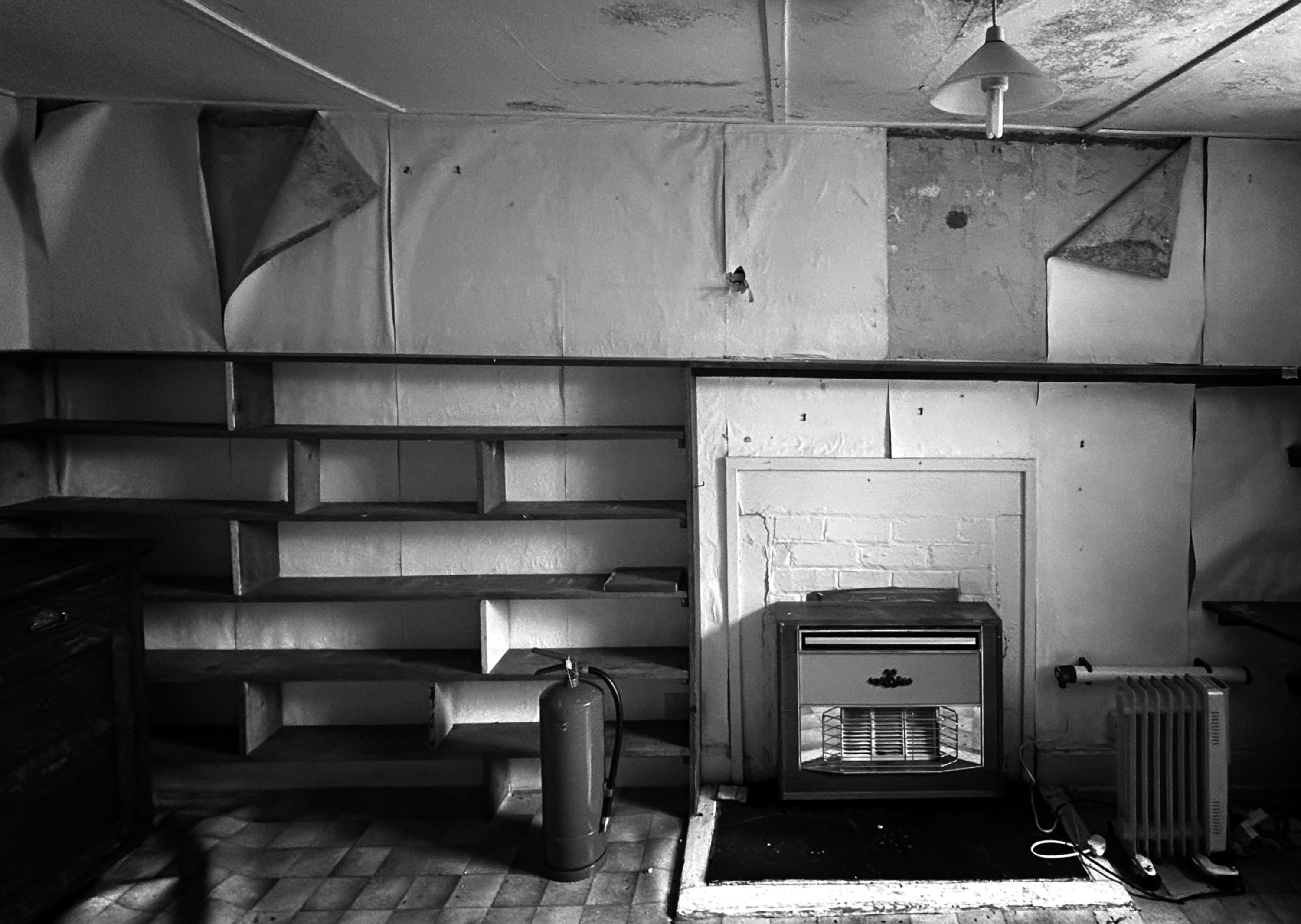
Valda’s Room 2024.

There is an irony to be found these days in Alexander Moffat’s painting. The artists in The Poet’s Pub who circle that central figure are, by and large remembered and celebrated whilst a fitting memorial to the centre of the painting decays.

The atmosphere around Brownsbank radiates a quiet forgetfulness whilst the landscapes which some of the other poets drew upon have changed beyond recognition.

For some too much attention, for others, not enough attention.

Dinna fash yersel ower much, but the whole clanjamfrie’s worth the thocht. (It’s worth looking up.)
Let no tongue whisper here.

Between those strong red cliffs,

Under that great mild sky

Lies Orkney’s last enchantment,

The hidden valley of light.

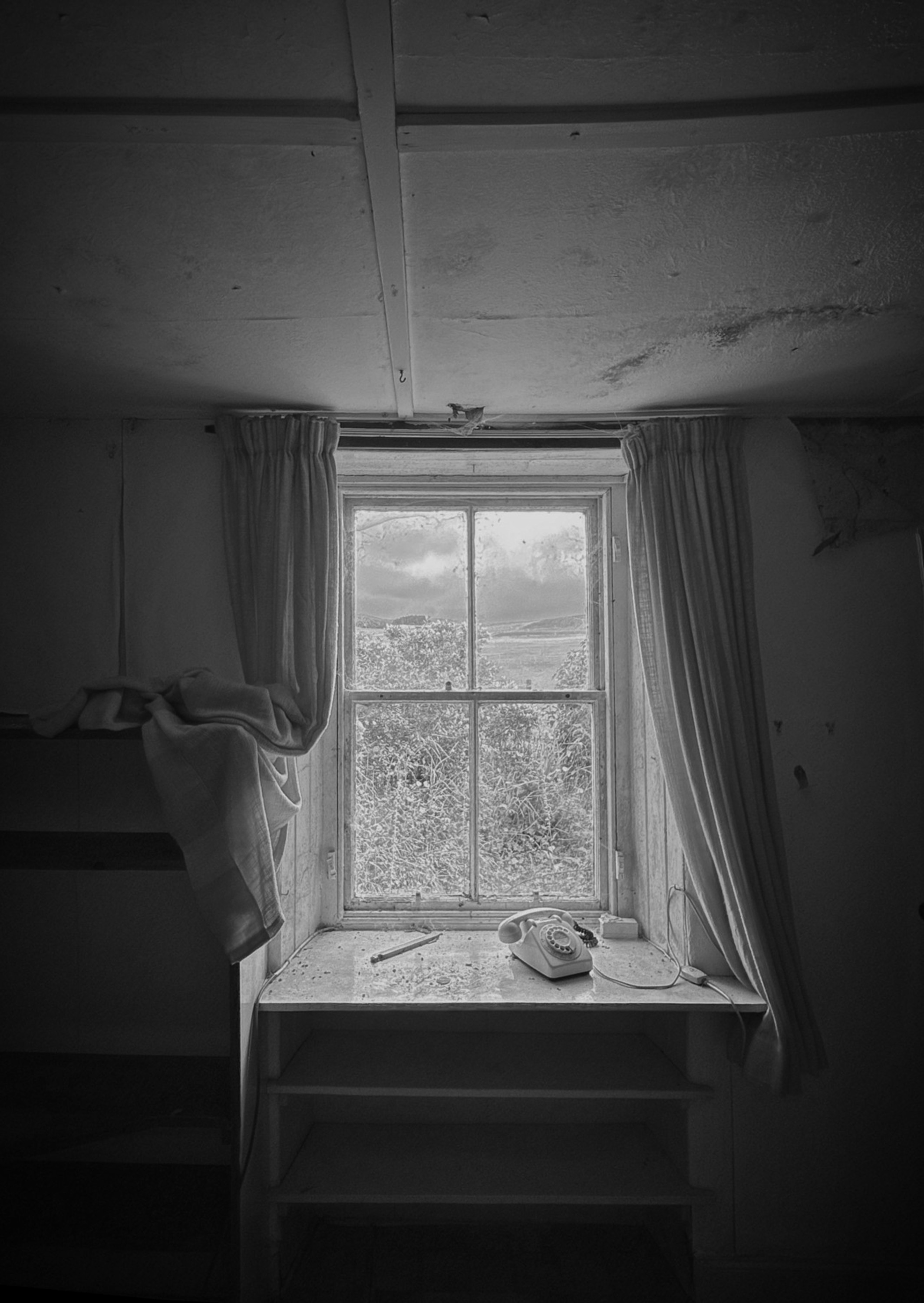
        George Mackay Brown … Rackwick

Glaciers, grinding West, gouged out

These valleys, rasping the brown sandstone,

And left, on the hard rock below – the

Ruffled foreland –

This frieze of mountains, filed

On the blue air – Stac Polliaidh,

Cul Beg, Cul More, Suivent,

Cansip – a frieze and

A litany.

        Norman MacCaig … A Man In Assynt

‘Time, the deer, is in the wood of Hallaig’

The window is nailed and boarded

Through which I saw the West

And my love is at the burn of Hallaig,

A birch tree, and she always has been

Between Inver and Milk Hollow

Here and there about Baile-chuirn:

She is a birch, a hazel,

A straight, slender young rowan.

        Sorley MacLean … Hallaig

It requires great love to read

The configuration of the land,

Gradually growing conscious of fine shadings,

Hear at last the great voice that speaks softly,

See the swell and fall upon the flank

Of a statue carved out in a whole country’s marble,

Be like Spring, like a hand in a window

Moving New and Old things carefully to and fro,

Moving a fraction of flower here,

Placing an inch of air there,

And without breaking anything.

        Hugh MacDiarmid … Scotland
Posted in Memory, Photography, Travel, Uncategorized | Tagged , , , , , , | Leave a comment

Giacomelli’s Campsite

Dear Mario,

I wanted to get in touch just now to wish you a happy birthday on your one hundredth anniversary. Your special day is 1st August and although you won’t be joining the celebrations in person I assure you that the things you did in the seventy five years you spent with us out of that one hundred will be remembered.

I’ve been in Senegallia recently and I’m sure you’ll be delighted to know that there are still a lot of people who love to tell Mario Giacomelli stories and all of them are told with love. 

Here I am in the U.K., in Gloucestershire, and I’m thinking about, and remembering, the landscapes of the Marche region of Italy.

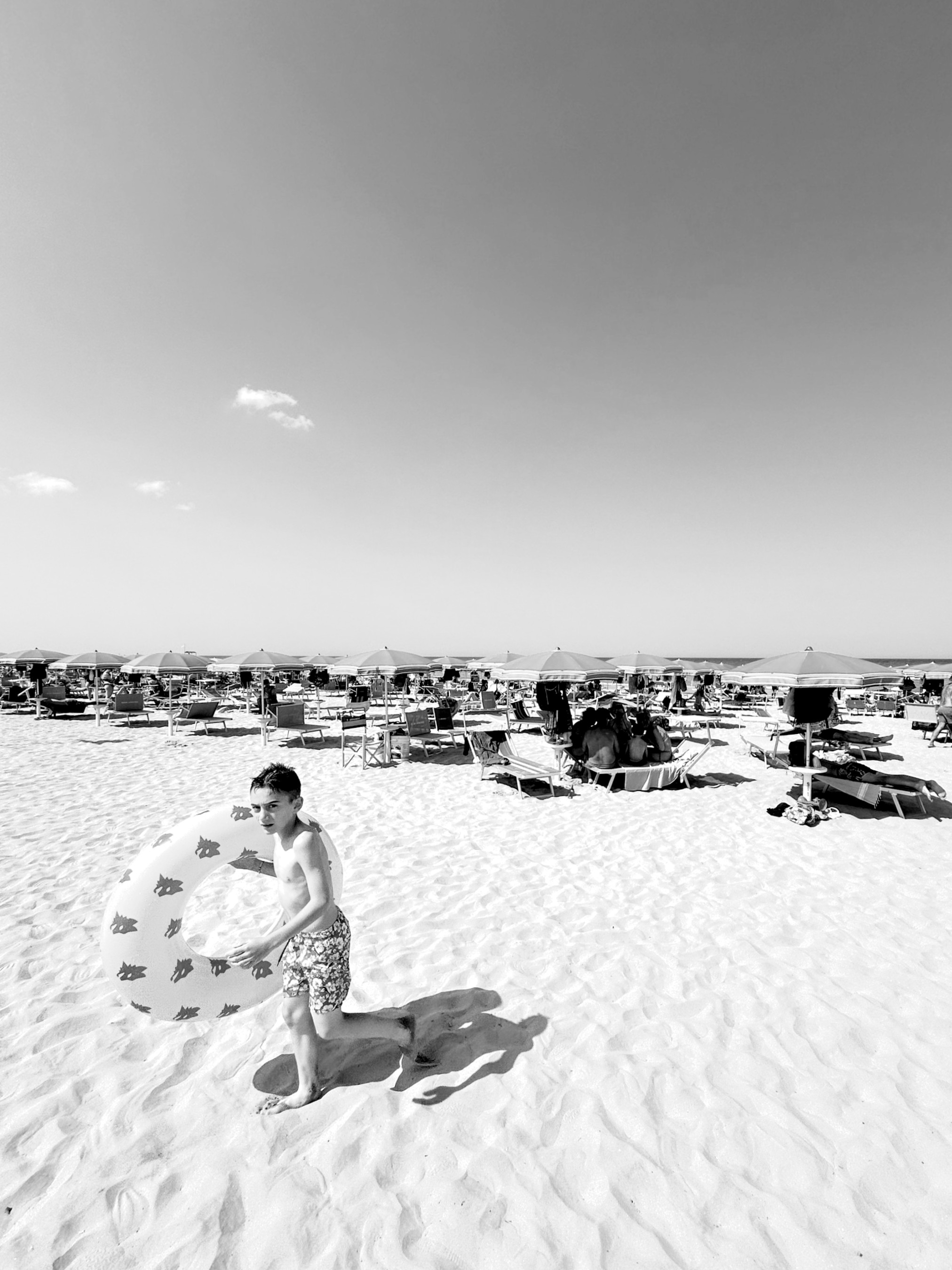
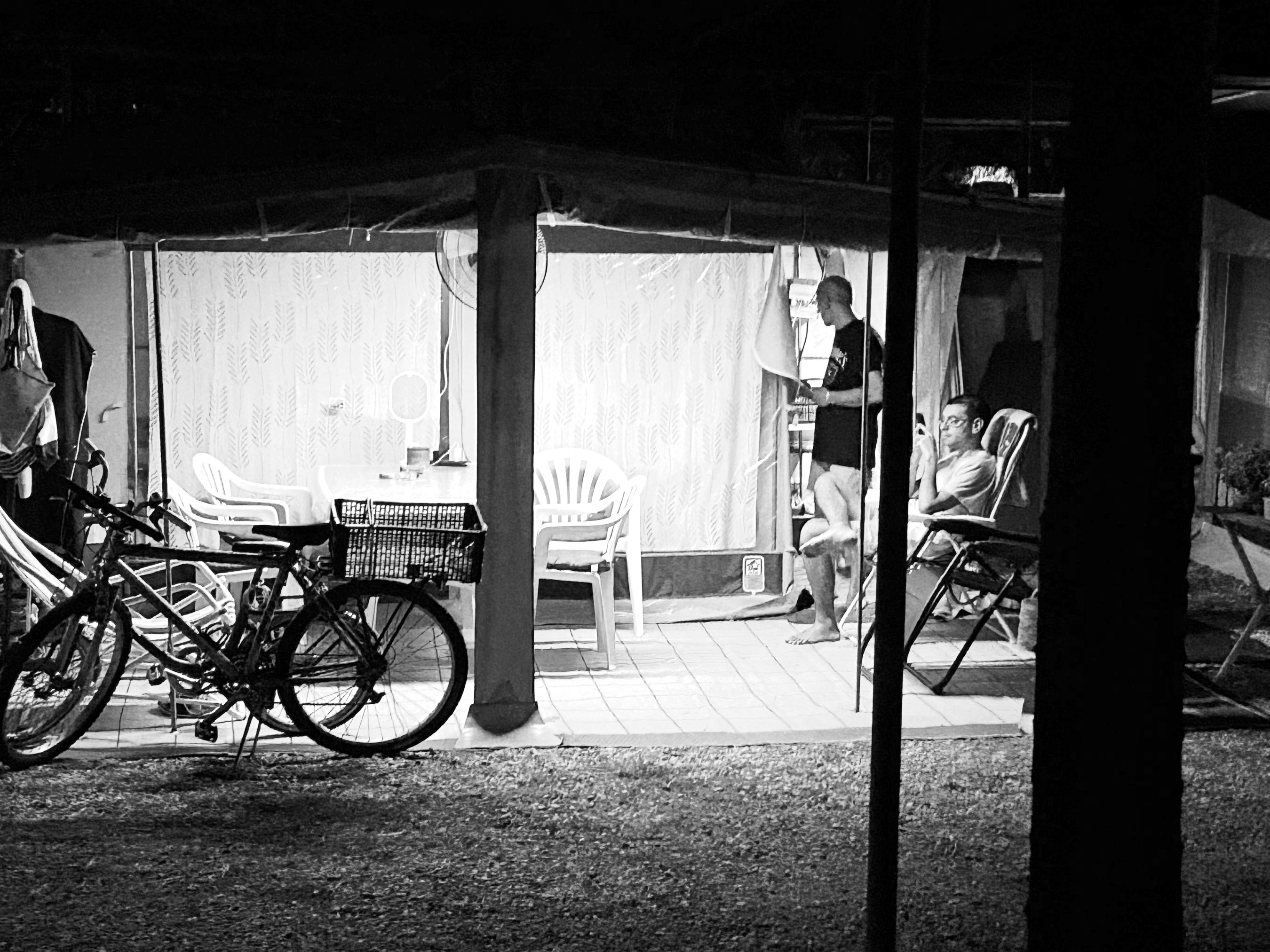
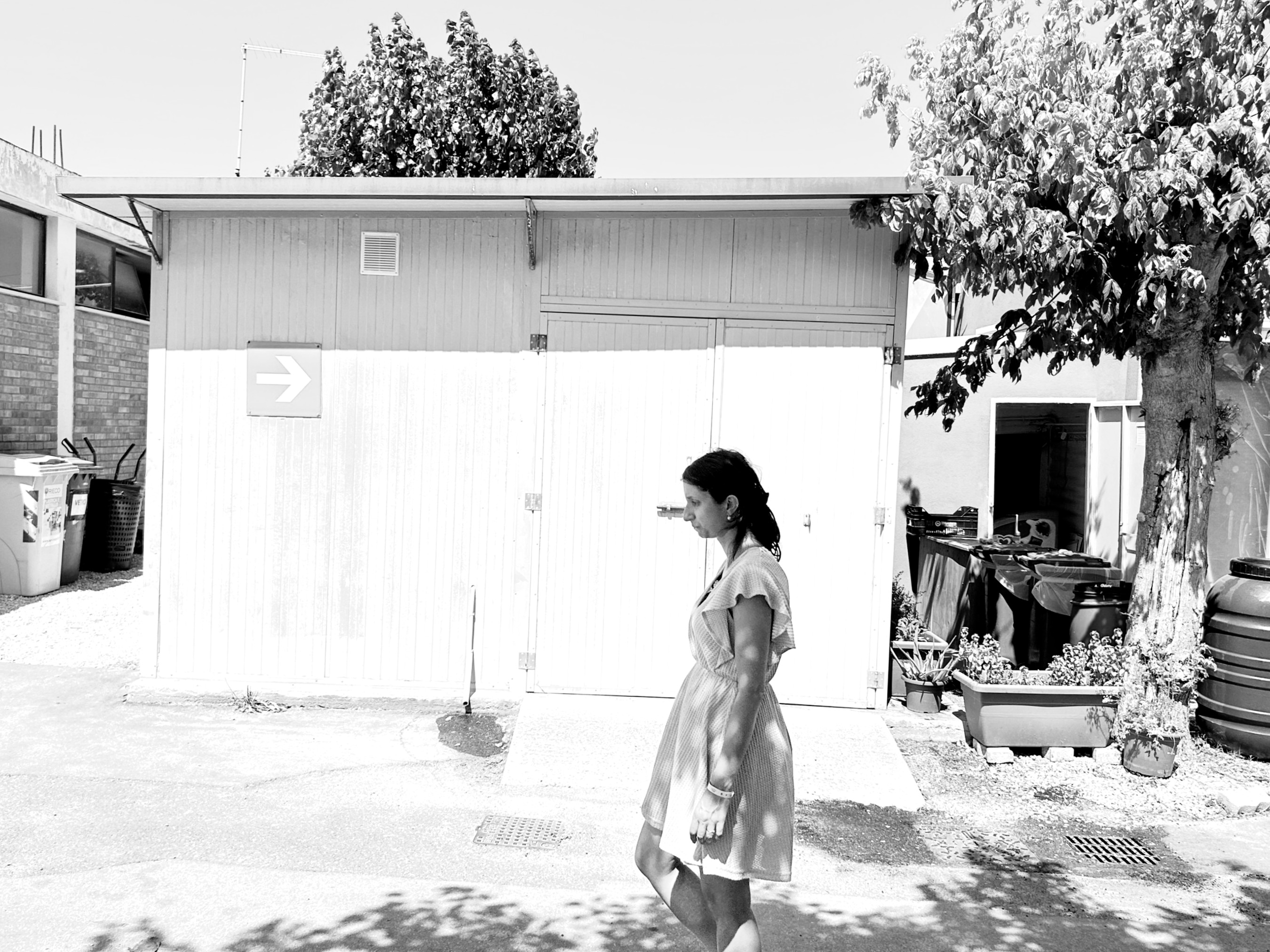
I’ve visited your home town of Senegallia a couple of times and there are some photographs here of places you would have known. I send them to your memory as a birthday gift.

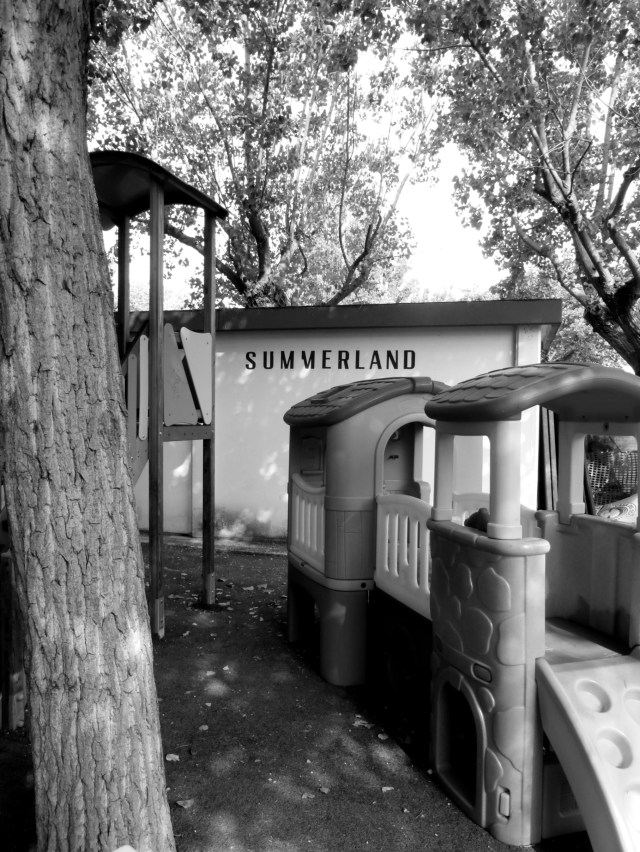
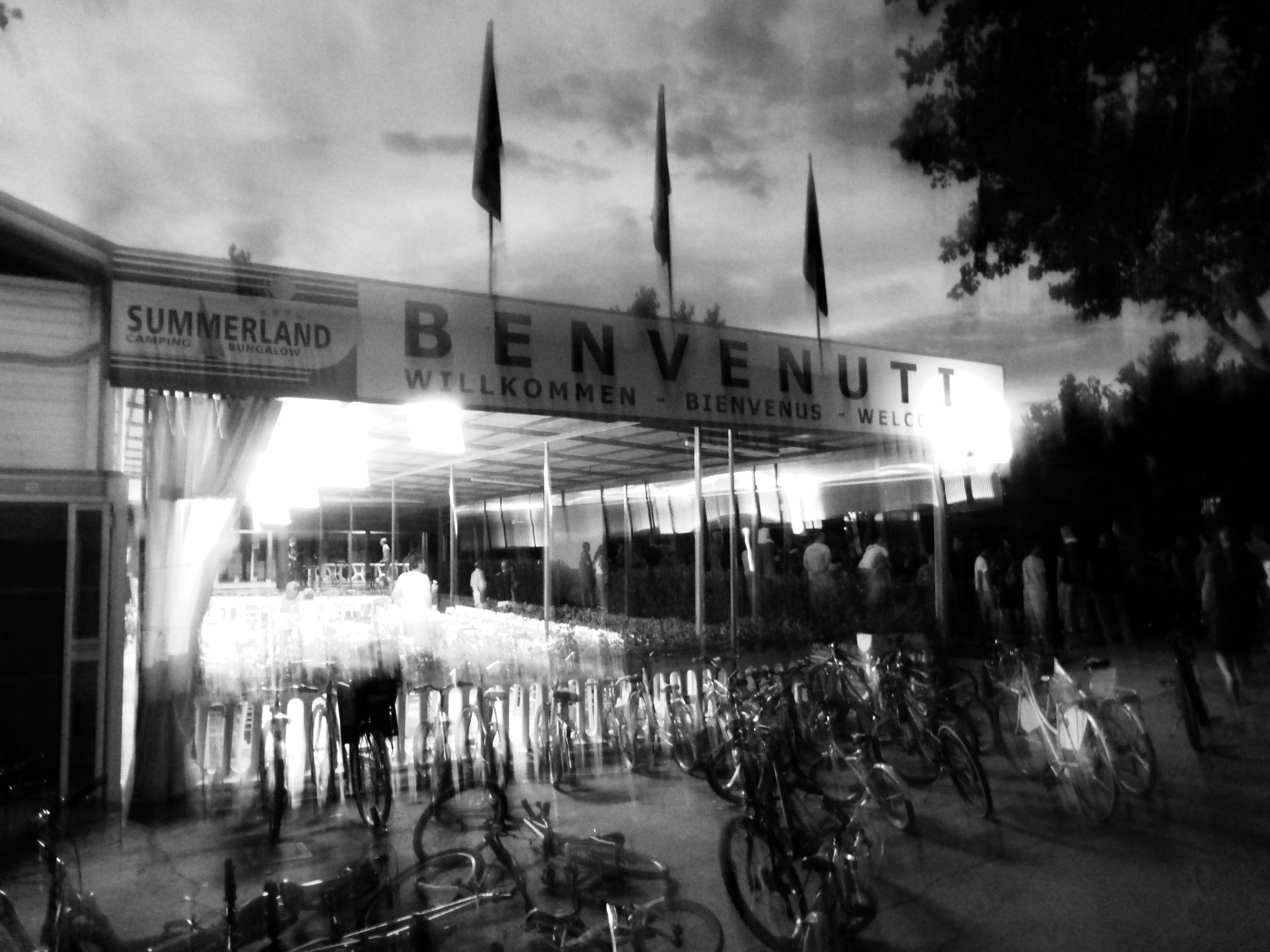
I am now, as I was when I first heard of it, amazed that you once owned a campsite called Summerland. But I suppose it’s just an ordinary thing for an ordinary man, born into poverty but doing alright for himself, to buy into in the hope of a bit of profit.

I have a strong impression that you were not someone for whom wealth, which you no doubt enjoyed in the latter part of your life, would ease the way into easy living.

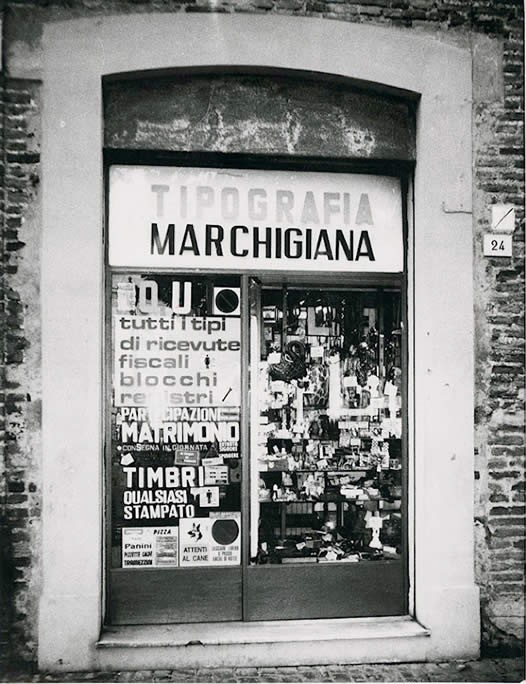
You kept the Tipografica Marchigiana, your commercial printing shop, open for most of your life.

The first time I visited the site of that business it had changed into a very stylish clothes shop and the young man who ran it had two original prints of your photographs on the wall.

He took me into the basement where your darkroom had been.

I’ve seen pictures of that darkroom and smiled at the chaos you worked in. The tattered photographs and portraits of people you admired, the newspaper cuttings taped to the walls and the notes to yourself along with sketches for future projects were like glimpses into your mind.

When I saw the room it was small and empty with bland, painted over brickwork.

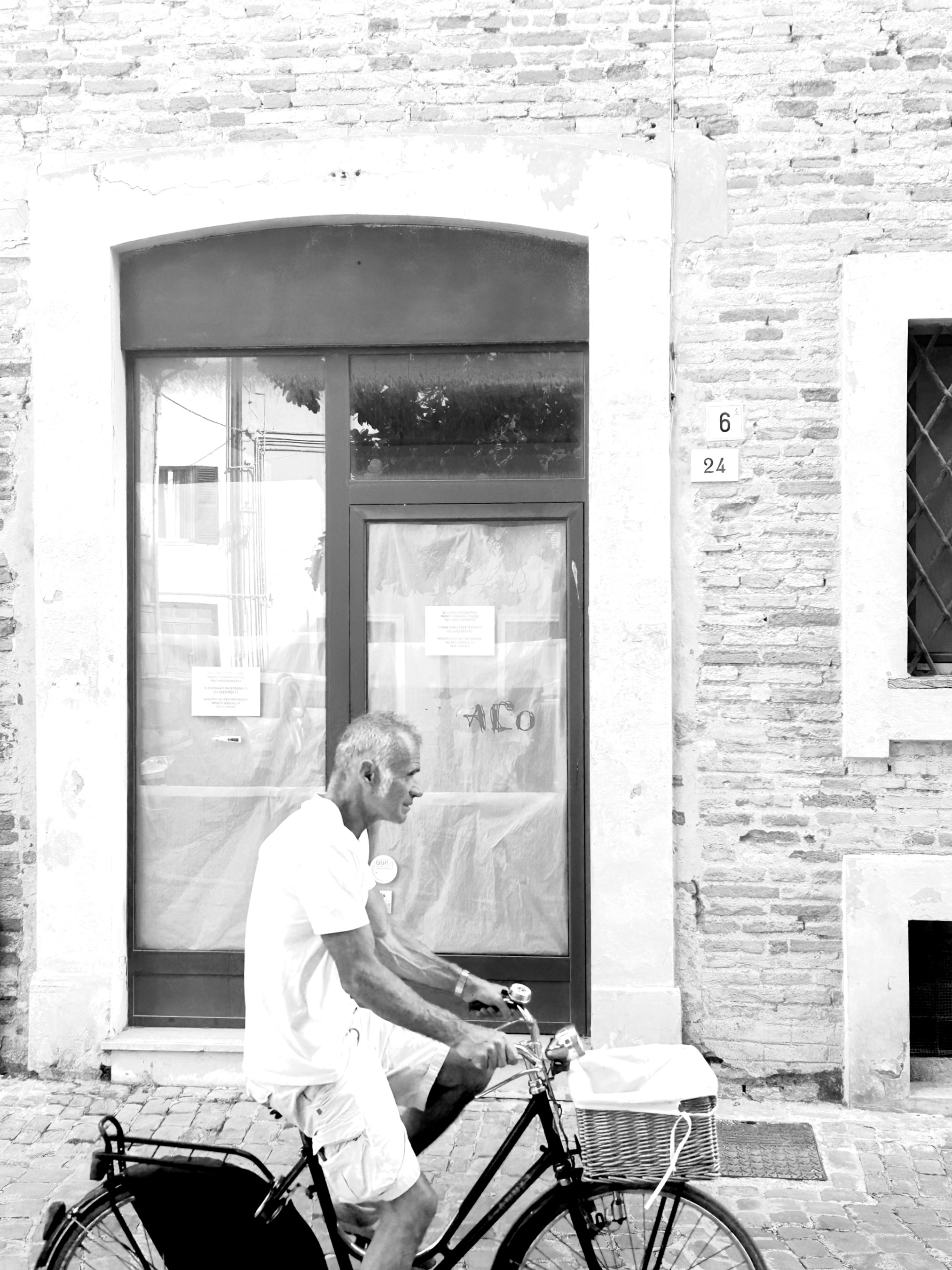
The shop you spent most of your life in is now empty and locked up and, just to get all the bad news out at once, your beautiful 1970s house, full of glass and light, has been pulled down and replaced with holiday flats.

A young woman at your campsite, who told me that her boyfriend’s grandfather used to go out painting with you, said that nothing is sacred in Senegallia now and everything bends the knee to profit.

Thankfully, you don’t have to worry about all that any more.

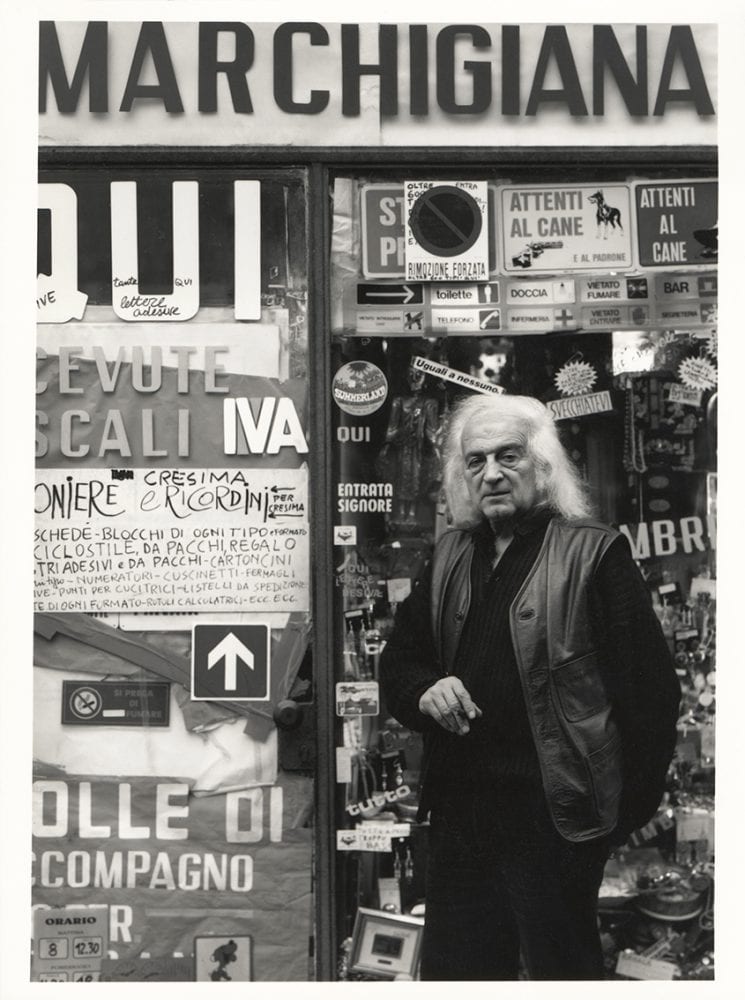
There are pictures from the time that you operated the Tipografica which show the windows covered with signs offering services and products. They show you too, leaning against the doorframe with the small cigar you never seem to be without and, most often, with a group of people. Always talking and often laughing.

I understand that you worked all week in your shop and made photographs at the weekend.

You took  a cumbersome, second hand, Kobel rangefinder camera with 6×9 plates and made photographs with double exposures, deliberate blurred movement and soft focuses in the landscapes and with the people within a few miles of your home.

These days all of those camera techniques are on show wherever you see photographs. The internet is full of them. Harsh contrast black and white prints are everywhere, including, I have to confess, in the collection of photographs I’ve made over the years. I, too, have been influenced by what you did.

I hope I’ve wandered into your style out of respect and followed your lead as an homage rather than simple copy cat image making.

But it’s not just the images I find fascinating although they must have been like disruptive dreams when they were first seen by the group you were part of.

After the war you were an active member of Group Misa, named for the river that runs through Senigallia and founded by the photographer Giuseppe Cavalli.

Post war Italian photography like yours was speeding away from an aesthetic favoured by the Fascist government and found its significant new influences in the cinema and the work of directors like De Sica and Rossellini.

You managed to travel a few steps further than the rest of your group and developed a style which  imbued documentary realism with abstraction.

The landscapes which resemble giant fingernail scrapings across fields, your priests at play in the snow and the isolated villagers and farmers eyeing us through their uncomfortable relationship with your lens, have become icons.

So, too, have the pictures which live as one with the grit of the torn landscapes but which were made with old people at the end of their lives who showed us the lines and creases of their ruined bodies. You spoke of these pictures as being cruel but they are also among the most honest photographs ever made.

Now, here’s the thing I mean when I tell you it’s not just the images, staggering though I think they are, which are the remarkable thing contained in your work.

That series of images of frail old people contains all the threads which I think makes your work so compelling.

Firstly, they were made in a home for the elderly in Senegallia where your mother worked as a laundress. 

This simple fact locates the work within the boundaries of what was familiar, local and had meaning beyond the subject. You managed to embed layers of story into the collection of photographs.

I’ve visited the building which housed the home and it was local to the place you grew up in. This and your mother’s involvement meant that it must have been in your mind from a very early time. It was part of where you came from and, of course, it represented where we are all going.

You exhibited these photographs in about 1954 under the title, ‘Hospice’, and continued working on the series until 1983.

That represents a long time for a photographer to be working on a project and that is the second remarkable thing about your work.

It evolves over time. It grows with you and changes as you change but always stays consistent to its own, and your own, personality.

In the mid 1960s you changed the name of the series, renaming it ‘Death Will Come And It Will Have Your Eyes’, after the first couple of lines of a poem by Cesare Pavese, ‘Death will come and it will have your eyes – this death that accompanies us from morning till evening, unsleeping.’

This connection between poetry and photography is the third ever present element in your work.

Your famous young priests at play in the snow was titled, ‘I have no hands that caress my face’, from a poem by Father David Maria Turoldo about young men who seek a solitary religious life.

The collection, ‘Spoon River’, which pursued the technique of double exposures and composite images, was titled to reflect the influence of the poem ‘Caroline Branson’ from the ‘Spoon River Anthology’ by Edgar Lee Masters.

The techniques here are the fourth of the constant presences in your photographs.

In the ‘Death Will Come …’ series you used a flash very near to your subjects, discovered unusual and disturbing points of vision and, as the series progressed, you began to print onto paper that was curled and bent rather than flat under the enlarger.

In your landscapes you removed horizons and with them our ability to read the pictures in an easy way.

‘Spoon River’ and your late work let rip with double and treble exposures, your own portrait with masks and other props lurking in the background, wires bent like strange hieroglyphs twisting between desolate over exposed buildings and the sea playing an elemental role with figures often superimposed over the waves.

None of your photographs were without movement and the tasks you imposed on them are also fluid and this is the final element of what I find wonderful about your work.

As time went by and your restless relationship with your pictures progressed, images from one series would begin to turn up in another.

As you got older your photographic poems got more complex, more abstract and more personal.

They became clearly autobiographical with titles like ‘My Marche’, ‘The Sea Of My Stories’, and, late in your life, the strange and mysterious, ‘I Would Like To Tell This Memory.’

You died in 2000 after a long illness.

In 1987 there was a comment of yours recorded which runs, ‘Of course photography cannot create nor express. But it can be a witness to our passage on earth, like a notebook.’

It’s been nice to chat to you, Mario, and to know, from you, that it’s rewarding and interesting to find ways of thinking of photographs which makes them important and a way to a stumbling understanding of the world.

I know that you are aware that you have been extremely influential in my own photographs and I apologise if, occasionally, I’ve drifted close enough to at least one of your signature styles to rule out of court any notion of originality on my part.

By and large, this collection, which I’m sending to you as a birthday present, owe more to your observation than your technique. 

If photographs can be witness to our passage on the earth then these are a notebook recorded on my passages through Senegallia.

Posted in Memory, Photography, Travel | Tagged , , , , , | Leave a comment

The Frequency of Triangles


I have always been delighted by the experience of suddenly becoming aware of an obscure bit of information or unusual object in the landscape and then finding myself stumbling over it again and again. I thought that this was the world’s way of reminding me that patterns exist everywhere and nothing is a coincidence.
What I didn’t know was that this experience has a name and it’s the ‘Baader- Meinhof Phenomenon’.
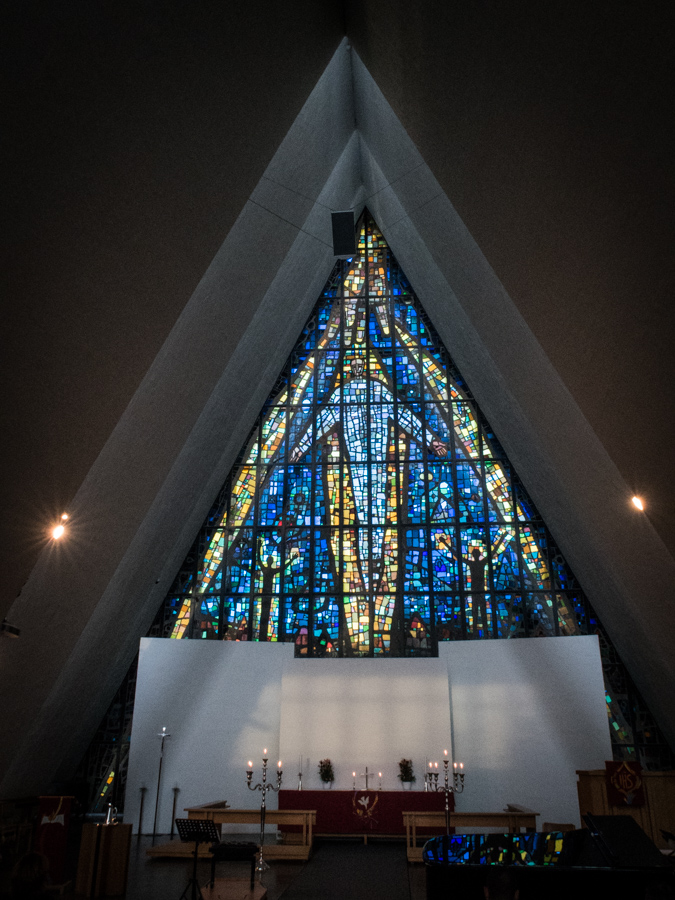
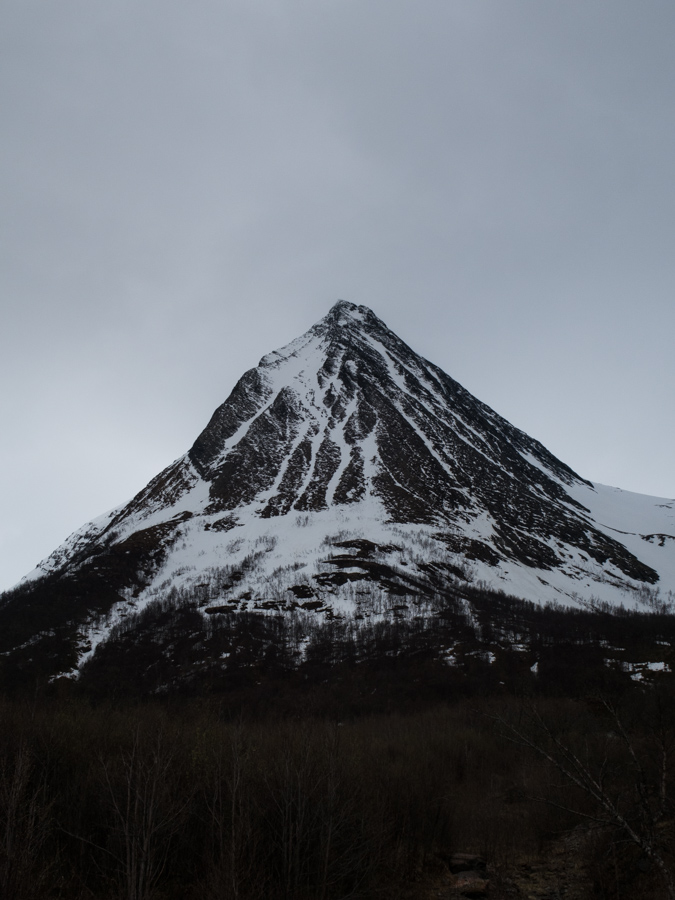
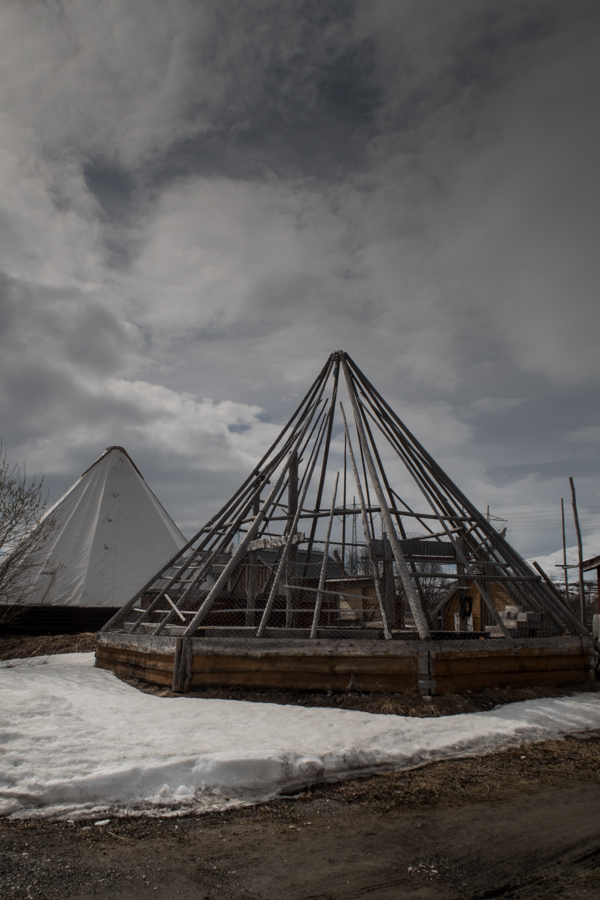
The photographs here are an example of my experience of the phenomenon. In the north of Norway I began to see triangles everywhere.
Why this thing is called ‘Baader-Meinhof’ is obscure and probably relates to a member of a group researching the phenomenon who heard a reference to the German urban guerrilla group and, shortly after heard references to them cropping up all over the place.
An alternative name, ‘frequency illusion’, gives a rather more scientific spin suggesting more strongly that your brain has tricked you.
The probable namer of the ‘Baader-Meinhof Phenomenon’ is Arnold Zwicky who, in 2006, suggested that the syndrome in which a concept or a thing you have just become aware of suddenly seems to be everywhere is the result of two processes. The first, ‘selective attention’, triggers when you first become aware of a new or unusual thing or idea. After the first notice, your unconscious keeps an eye out for it resulting in finding it often.
The second process is ‘confirmation bias’ which reassures you that each time you notice the thing means that your initial belief that the thing is suddenly everywhere is proved.
Personally, I prefer to believe that the Universe is showing me patterns.


Posted in Memory, Photography, Travel | Tagged , , , , | Leave a comment

All This Is Called Love

I have memories of Vence, which sits in the Alpes Maritimes between Nice and Antibes, which are based on a proper tangle of truth and fiction. To me it’s a strange place where complicated theatres have been played out and the stories told have been interpreted and reinterpreted over and over again whilst the unfolding of actual events gets muddier.
That’s no doubt because the stories are mostly about artists and their complicated lives.
The town is not far from the village of St. Paul de Vence where the painter Marc Chagall lived and died. Some of his most beautiful works were made there and there he is buried.
There are reasons aplenty to celebrate Chagall and his time in St. Paul where he had the opportunity to be reasonably quiet. A lot of his work was made in the melting pot of some of the most turbulent moments of the 20th Century.
I love Chagall’s work for its compassion and insight but I have stood by his grave and recalled what are reported to be events which were played out on that stage. If his work gives us a glimpse into the human condition then so too does his funeral, but in a somewhat different way.
The cast of characters was interesting.   I understand that Pablo Picasso’s widow, Jacqueline, embraced Chagall’s widow, Valentina, perhaps whispering in her ear something about what it means to be the surviving wife of a rich and famous painter. Chagall’s first wife, Bella, had died in New York in 1944 after being his muse and the beautiful mysterious woman in so many of his paintings. Their daughter, Ida, was there.
Someone in the crowd wanted to say the Kaddish and Ida refused to hear it. But as the coffin was lowered into the ground an unknown young man, possibly a Yiddish journalist, stepped forward and quietly uttered the Jewish prayer for the dead.
Chagall had one son, David McNeil, whose mother was neither Bella nor Valentina. He was there too but the family refused to have him sit with them and he stood alone, crying in a corner.
Vence and the area around it bristles with the leavings of great artists.
Matisse was famously involved with the creation of a chapel in Vence and I became aware of a story which placed an event, involving Sylvia Plath, on the terrace of that chapel.
The building of the chapel was an act of love on Matisse’s part. For Sylvia Plath, it represented the crossroads of passions which eventually lead to her relationship with Ted Huges and whatever pain that involved.
In 1941 Matisse was diagnosed with abdominal cancer. The complications arising from his surgery almost killed him and left him much weakened. He placed an advertisement for assistance. As a result, he was helped through his long and no doubt painful recovery by a young part time nurse called Monique Bourgeois. A deep Platonic friendship developed between them which was strong enough to persuade Matisse to ignore his innate Atheism to become involved in the making of a Chapel.
In 1943 Monique Bourgeois entered the Dominican Convent in Vence and became Sister Jacques-Marie. She told Matisse of plans the Dominicans had to build a chapel beside a girl’s high school a short distance along the avenue from Villa le Reve. She asked him to help with the design.
His collaboration with the Dominicans was born out of profound gratitude, friendship and love.
The Chapel of the Rosary is an oasis of light and calm.
At its side is a terrace filled with the scent of flowers and surrounded by trees.
The terrace was visited by Sylvia Plath in the early days of 1956.
In her final months as a Fulbright fellow at Cambridge, Sylvia Plath was ending a love affair with Gordon Lameyer, sleeping with Richard Sassoon and balancing a blazing sexual relationship with Peter Davidson.
She spent Christmas in Paris with Sassoon who turned his back on her after a monumental row on the terrace of the Matisse Chapel.
Emotionally exhausted and scarred, she returned to England where she was taken to a party at the Women’s Union in Falcon Court Cambridge. Her date on that evening was Hamish Stewart but here she met Ted Hughes for the first time.
Hughes was with another Cambridge student called Shirley whom he had asked to live with him in Spain where they would both disappear leaving everything they knew behind.
It seems that Hamish Stewart punched Hughes at the close of the party. Plath and Hughes had been enthusiastic about each other. They had danced, stamping their feet on the kitchen floor. Hughes ripped a red hair band from Plath’s head and pulled out her earrings. After a passionate kiss, watched by Shirley, Plath sank her teeth into Hughes’s cheek drawing blood and leaving a scar which took months to heal.
It would seem that on that quiet and gentle terrace, Sylvia Plath, through the violence of rejection, was propelled onto the first steps of a journey through which passion and destructiveness played equal parts and which ended so tragically.
It’s not a bad place to spend a little time to reflect on the fact that love has many faces and the experiences born from our different interpretations of what that means are very different indeed.

,

Posted in Memory, Travel, Uncategorized | Tagged , , , , , , | Leave a comment

Cameras and truth telling…

IMG_2830

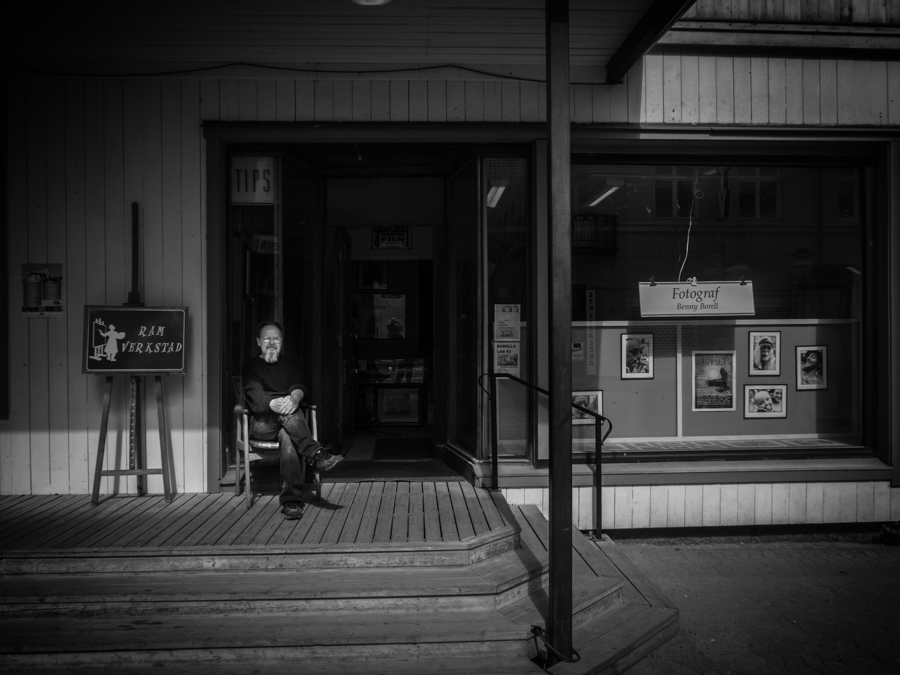
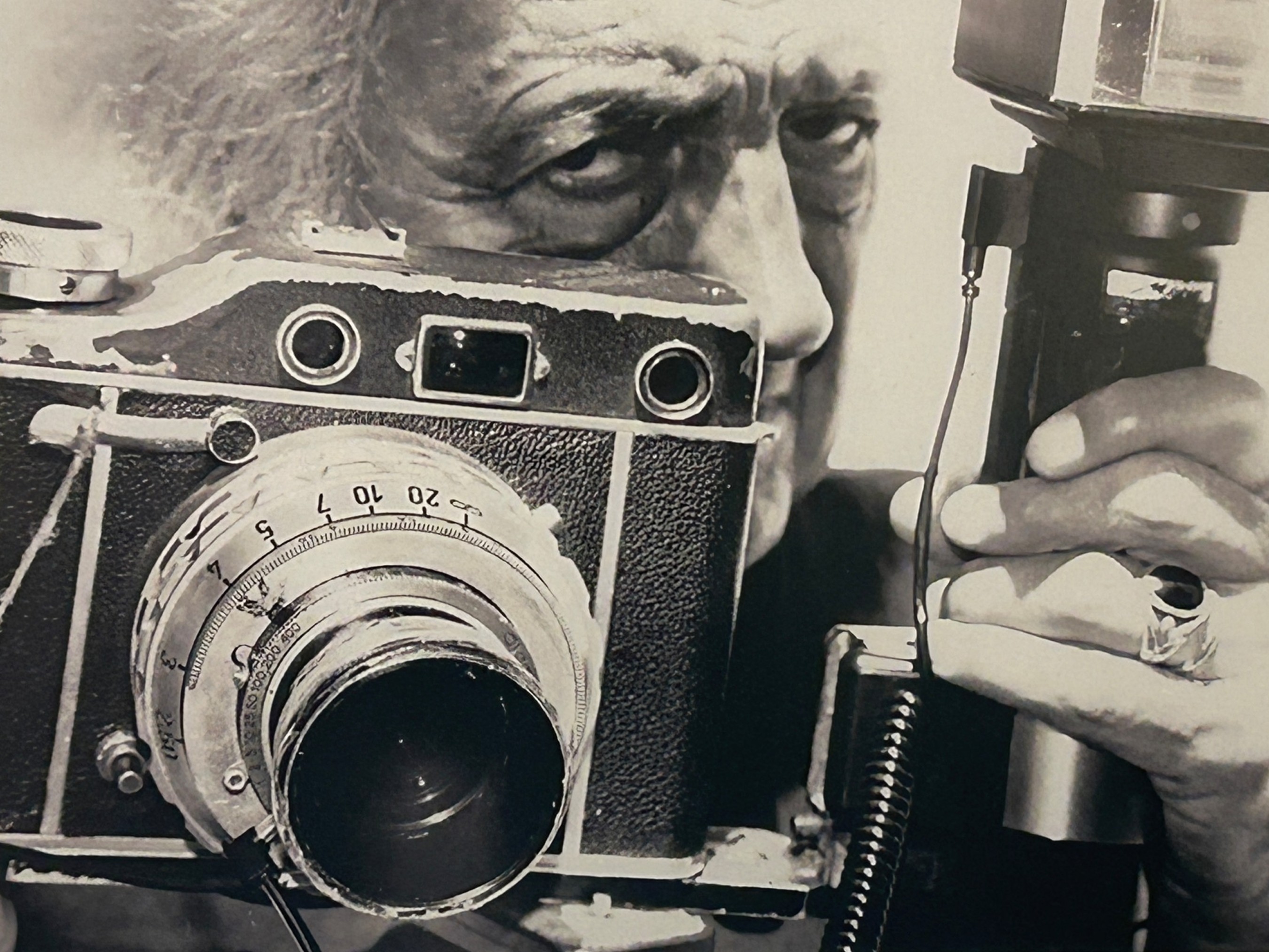
Benny Borell has a photographic studio in Solleftea in Sweden. Solleftea also has a huge, eye watering liquor store and an elegant cafe with good coffee and overpriced open sandwiches. Benny Borell is a professional photographer and I enjoyed meeting him. I wish I could forward this note to him to tell him so but he has no computer. That says a lot, these days, about a professional commercial photographer.
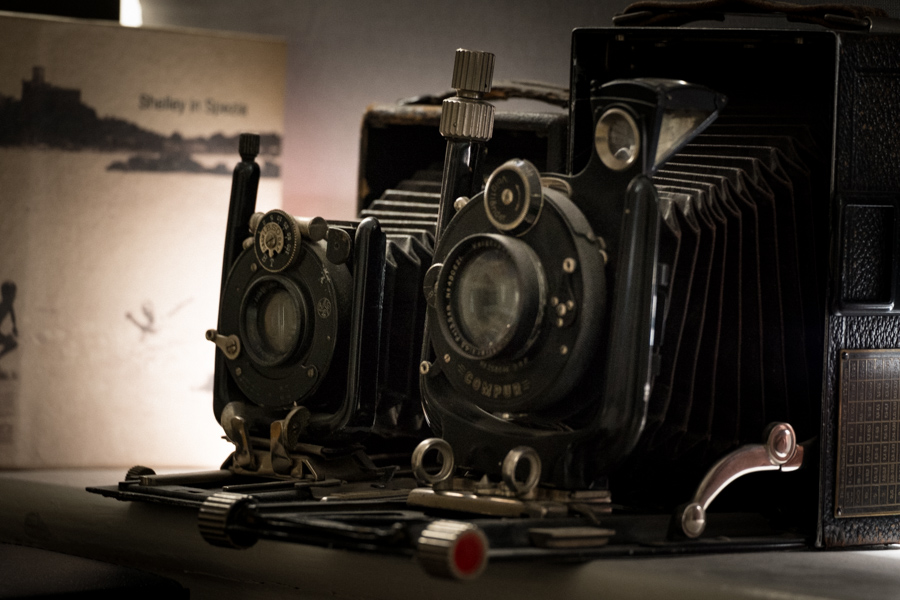
Benny’s studio is full of cameras with bellows and beautifully crafted Hasselblads carved out of solid pieces of aluminium. He has a darkroom that smells of chemicals and an anti-room where enlargers of complex shapes and designs are stored. Above the darkroom is a framing workshop with the same pile of strewn about mouldings that can be seen in any framing studio anywhere you look.
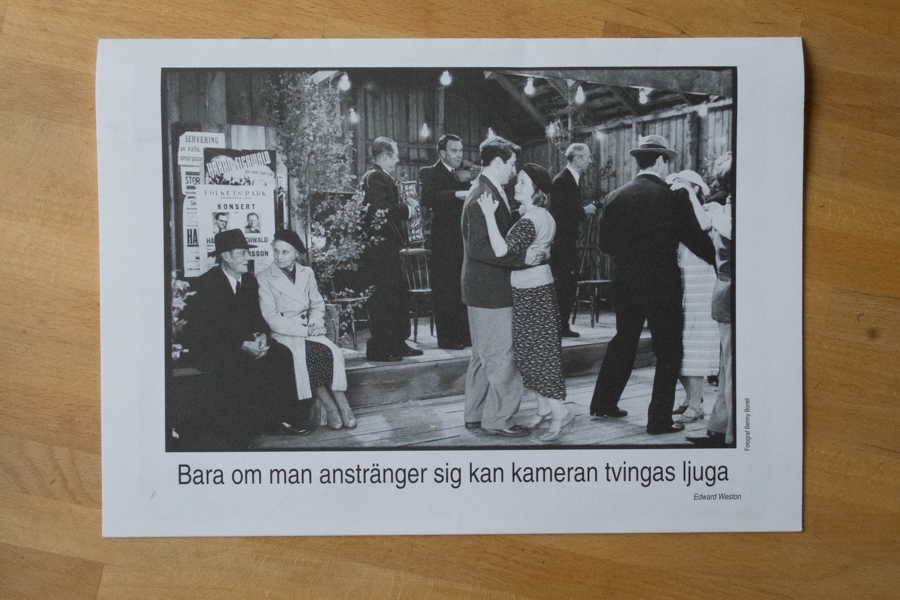
On the front of Benny’s work brochure is a black and white photograph of people dancing in front of a well dressed fiddle and accordion band. The photograph could have been taken any time in the late 1940’s or the 1950’s but it has Benny Borell’s name at the side of it crediting him as the maker. Benny would have been a very young photographer indeed to have made the photograph at the time it seems to depict but he has, underneath the picture, a quote from Edward Weston which encourages you to think about the photograph’s honesty.

untitled-15

The quote, roughly translated from the Swedish, reads, “Only if you strive may the camera be forced to lie.”
Amongst the work of Edward Weston, a wonderful American photographer, is a series of images which I have always thought of as erotic vegetables. Beautifully rendered images of peppers with languid curves and shadows which immediately take your mind to the human body. He was working at a time when there was surprise in finding sexuality in flowers painted by his friend Georgia O’Keeffe.
There isn’t any lying in those pictures, just looking closely, but about a decade before Robert Frank took off on his road trip which became ‘The Americans’ photo series, Edward Weston took a similar trip with the aim of making photographs which would sit with Walt Whitman’s ‘Leaves of Grass’.
Weston’s wife, who accompanied him on the trip, complained to him that he was too fond of seeking out the unusual, visually stimulating and extreme parts of American life and that his pictures didn’t show what they claimed to, the ordinary experience of Americans, at all.
I think that, if they ever existed, the days of working hard, striving, to force the camera to lie are long since past.
Photographers have always, like Edward Weston, chosen which bit of the truth to tell, which bit of reality to show, which part of an event or a scene to frame, which moment to expose an image. These things define the narrative of an image and establishes its truth. Added to this sort of choice it is now easier than ever to alter reality in a digital file and represent your experience in your own chosen way. This is the photographer as artist showing the world not as it is but as he or she feels it to be.
Is there anything wrong with being comfortable with the fact that cameras lie? Absolutely not. Most photographers are no more documentary makers than most poets are journalists.
The problem is that many of us believe photographs to be recordings of the real world and, at a time when it is no longer required to have to strive too hard to force a camera to tell a lie, it is important to strive to make the camera tell the truth when the truth needs to be told.
I enjoy the idea of Benny Borell seeing the world through ground glass and chemicals and keeping far, far away from computers. I like it that he might be interested enough in whatever meaning photography has wrapped up in it to add riddles into his commercial brochure.
There seems to be a little more chance of somehow making honest photographic images with cameras, lenses and film than with digital files. That may be an entirely romantic notion but I’m looking at some of the lovely instruments I have in my room tucked in beside the screens and thinking about the work and ingenuity that went into making photographs with them. I have some unpredictable, out of date film to load into them so thank you Benny Borell for the interesting little thought journey that our short meeting inaugurated.

untitled-8


Posted in Memory, Photography, Travel | Tagged , , , | Leave a comment

Light and Shade

001
At the Northern tip of Jutland, in the town of Skagen, the artists Michael and Anna Ancher gathered around them a community of painters.
In their house in Skagen they painted light filled canvases showing the grace and strength of the community clinging to the coast of that sun bright place.
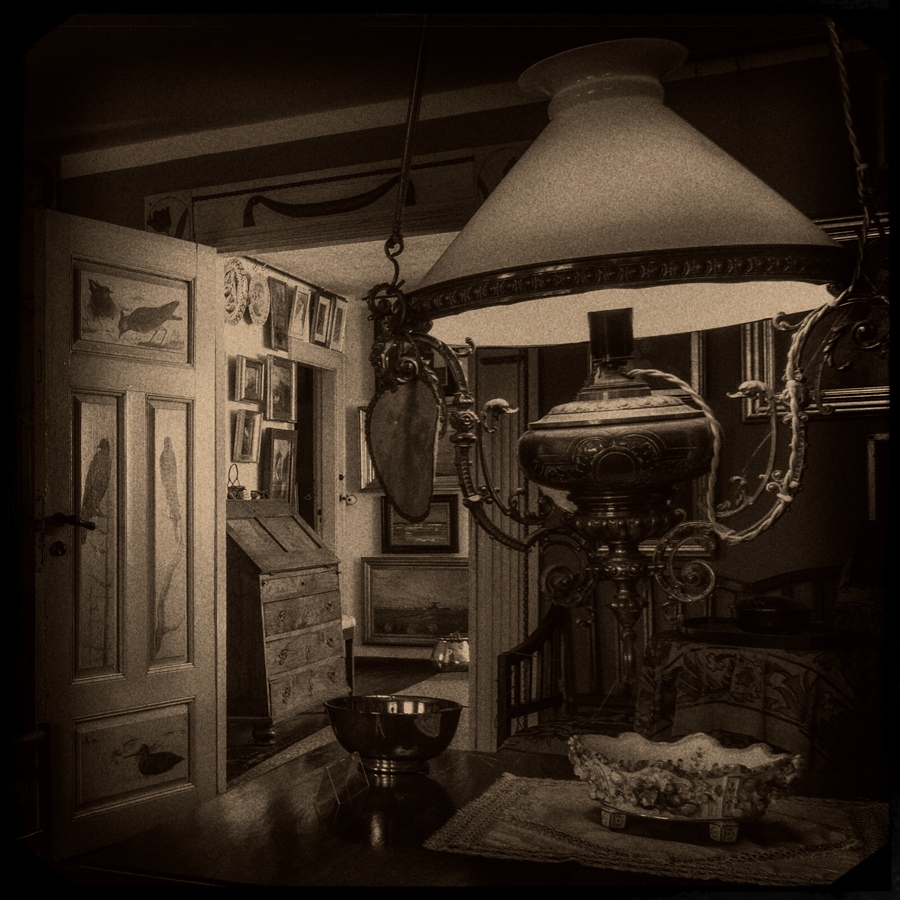
Strangely, though, their house is dark and lightless. Even the studio Michael Ancher built for himself in 1913 is dark. The rooms are small and crammed with furniture and paintings and the sun seems never to penetrate through the small windows.
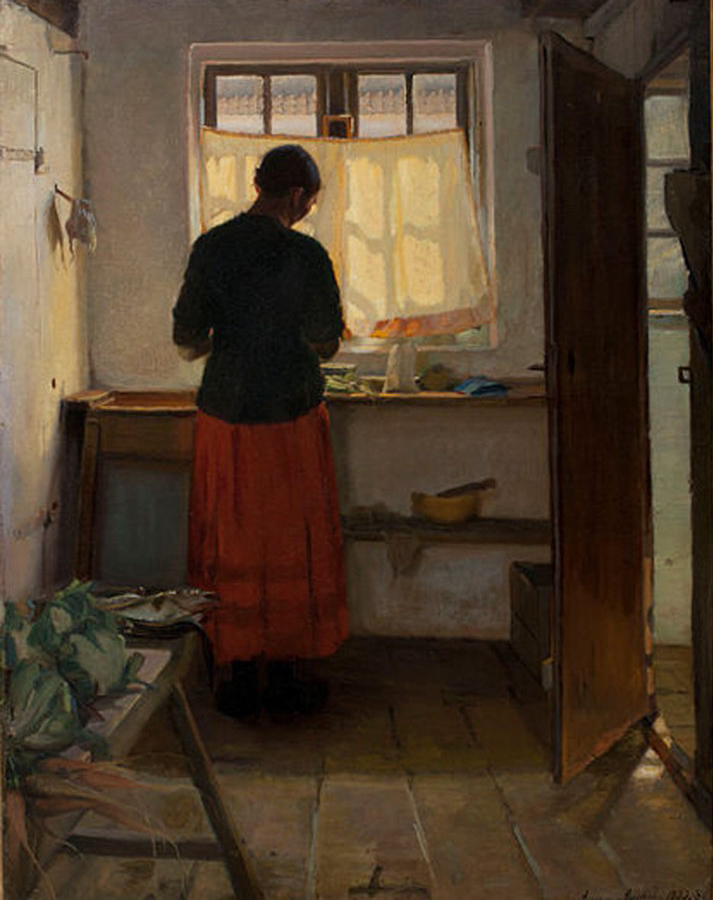
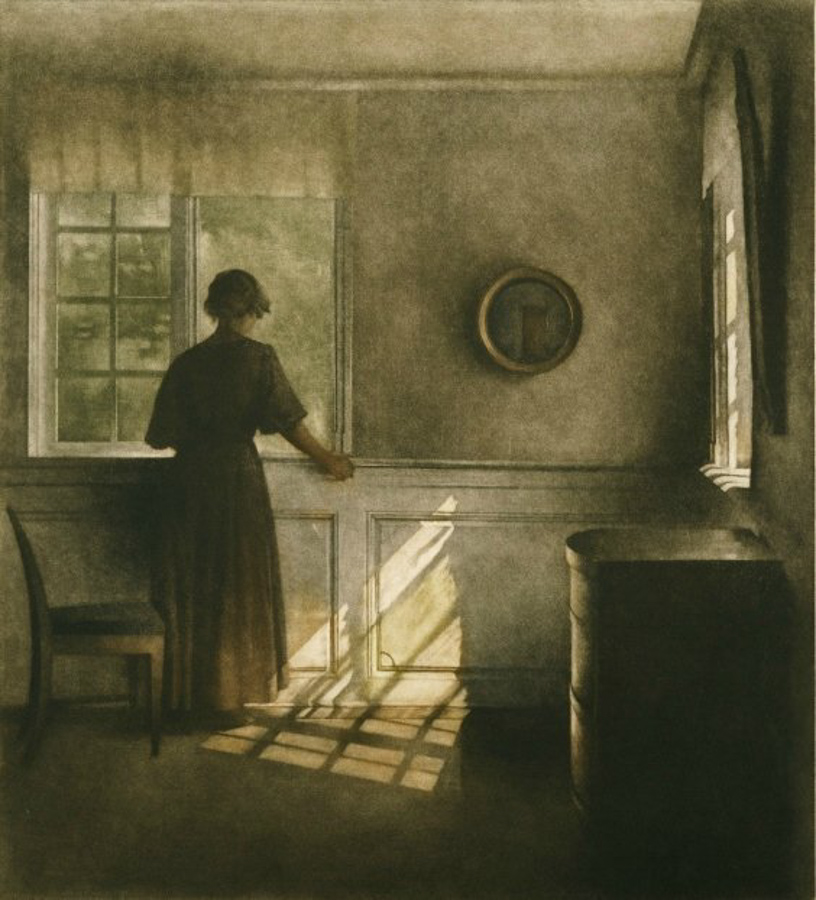
Anna Ancher made a painting in about 1886 called “The Girl In The Kitchen”. It’s bright and beautiful and we look into the light over the girl’s shoulder as she prepares a meal. Her stance and the way we are spying on her without her knowledge remind me of the Copenhagen painter Vilhelm Hammershoi although Hammershoi seems to occupy a tonal landscape somewhere between the Anchers’ light filled paintings and their dark rooms.

ancher and hammashoi-1-3       ancher and hammashoi-1-4

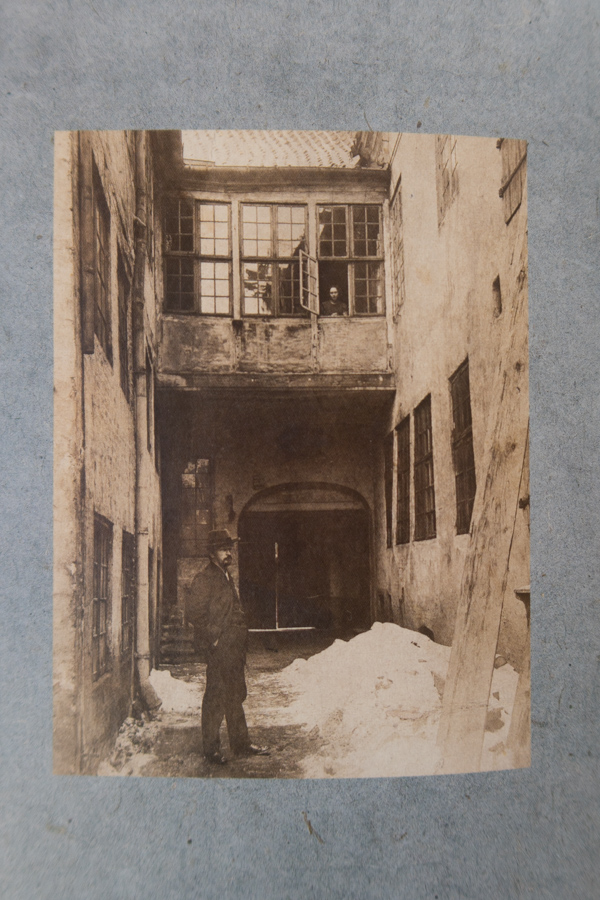
There is a photograph of Hammershoi made sometime between 1898 and 1909. In it he stands in a courtyard which has recently been swept after heavy snow. He has his hands in his pockets and he casually watches us watching him from a distance of a hundred years.


ancher and hammashoi-1-2                 001 copy3


Above him his wife, Ida, stands looking out of a high window.
I love Hammershoi’s work for it’s stillness and quiet.
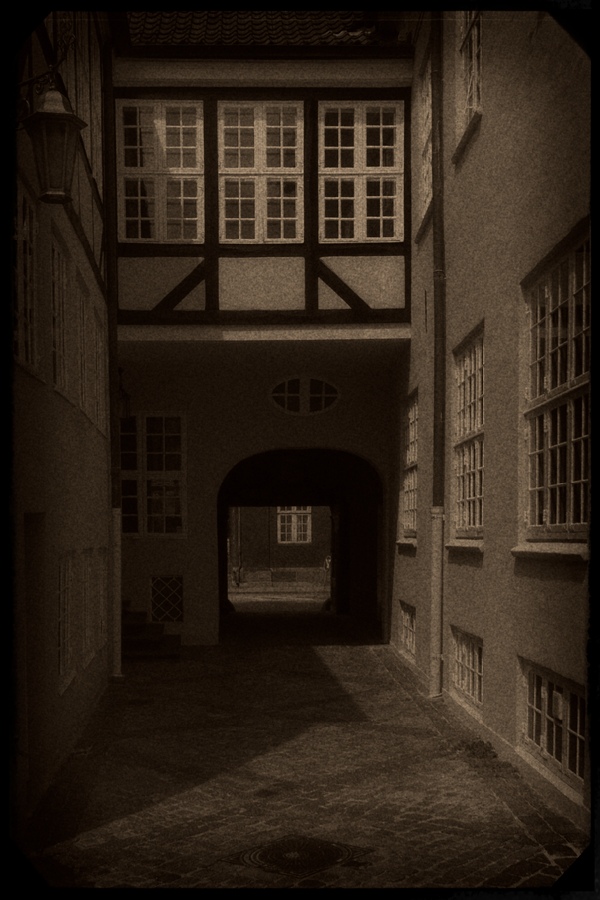
Many of the works, made in the apartment he is standing beside in the photograph, have Ida in them but she is almost always seen from behind like Anna Ancher’s girl. We watch her as she gets on with her life or marvel at the line of her neck as she looks out of windows: looks out of the window she fills in the photograph so that what we see is the front plane of a scene Hammershoi studied over and over again from within the house. He put what he saw then and what it meant to him onto canvas for us.
The apartment is at Strandgarde 30 in the Christianshaven district of Copenhagen and we must have passed it during our first walk around the city. We had to drive there again to see the place and reclaim Hammershoi’s calm.
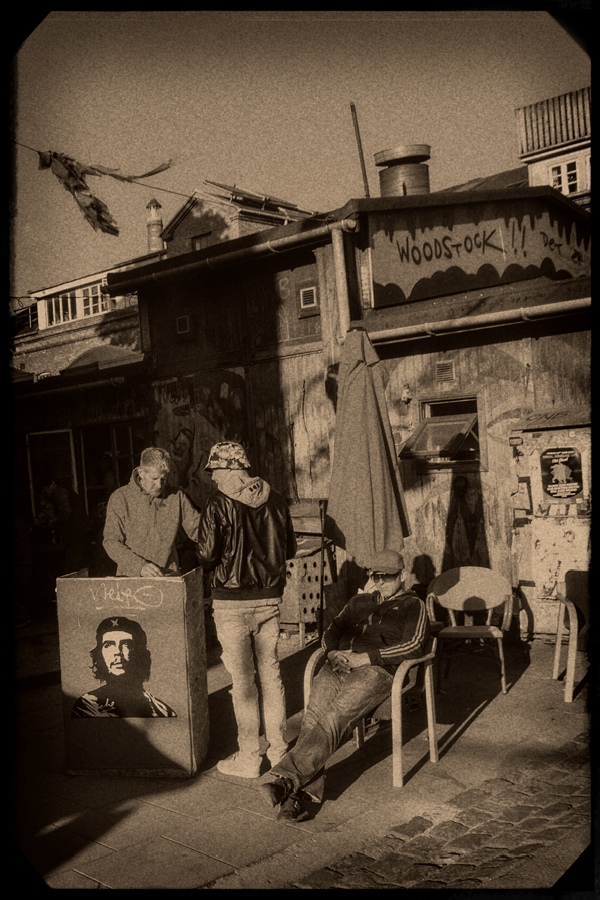
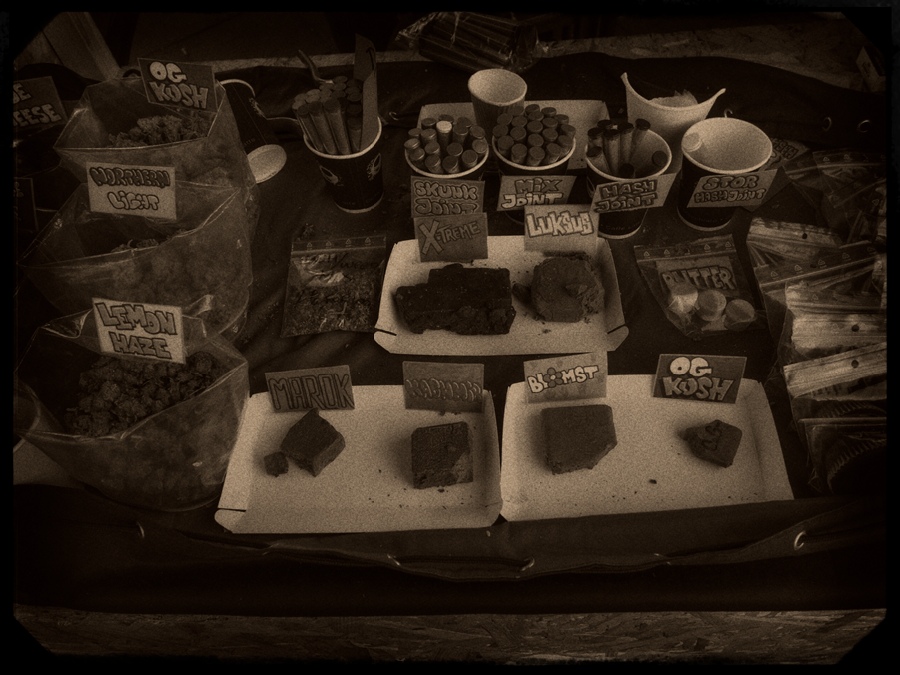
Our first visit had taken us into Christianshaven to Christiania or Freetown Christiania as it is called. Searching for a remnant of good old 1960’s Hippy culture we slid through a market of drug sellers on the aptly named Pusher Street.
The trade was tolerated until 2004 since when attempts at introducing measures to normalise the neighbourhood have led to conflicts and police raids which seem to have had questionable effect.
In 2005 one resident was shot and killed and others injured in a gang attack over the control of the Copenhagen cannabis market. In 2009 a hand grenade was tossed into the crowded Cafe Nemoland and in 2016 someone who was resisting arrest for cannabis sales pulled out a gun and shot three people.
There was a pleasant cafe. Beyond the cafe people yelled at each other and young, purposeful, men stopped tourists, spoke quietly to them and watched as they deleted photographs from their cameras. I made a couple of photographs with the knowledge of the minders speaking to them with a lightness I did not feel.

001 copy

001 copy1   001 copy2

It was all a matter of yards and years from Hammershoi’s door and the memory of those still, quiet interiors.
Posted in Memory, Photography | Tagged , , , | Leave a comment

Uppsala

uppsala-1

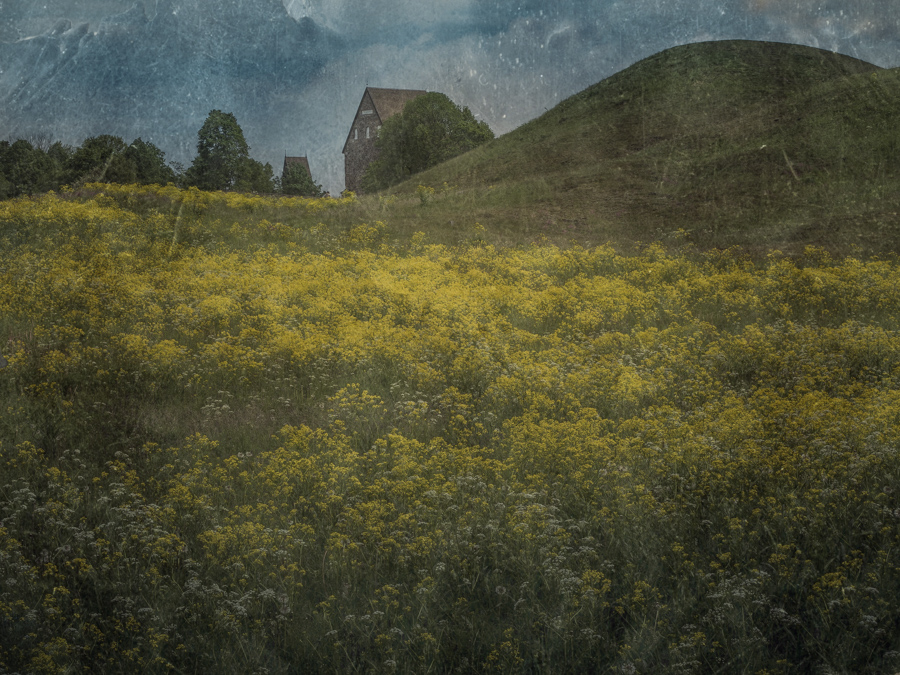
Gamla Uppsala sits in layers of time which have been marked, in the 2000 years since the land rose above water, by the burial of people.
It is said that under the church, which was once the Archbishopric of Sweden, lie the remains of the great temple of Uppsala and that Odin himself resided nearby far back in the mists of time.
In the second half of the Eleventh Century, Adam of Bremen told that every nine years in the temple of Uppsala a festival was celebrated when nine of every kind of male creature were sacrificed to old and dangerous gods.
Near the temple, in a large grove, stood a great tree with outspread branches which were green in both summer and winter. What sort of tree it was no-one knew but from its branches, and from the branches of other trees in the grove, bodies were hung to rot. Dogs and horses were seen to hang beside men. Seventy two corpses had been counted hanging together.
At Gamla Uppsala kings are buried under great mounds with treasure and fine things for company. And it was here, on such a burial mound that Pope John Paul Ⅱ chose to stand, elevated above his people, to perform a great open air mass in 1989.
In the church today a red carpet fills the floor leading to the alter and under it, under the floor and, perhaps, within the foundations of the ancient temple, is a tomb containing the remains of Anders Celsius, the temperature man, who died in 1744.


Posted in Memory, Photography | Tagged , , , , | Leave a comment

Scandinavian Seas

001 copy5

Most of the time, when you reach the edges of countries, it’s hard to identify the furthest point of land but Denmark ends, on it’s Northern shore, in a sharp little point.
It’s a point where two seas of different densities meet and refuse to mix but perhaps the most important thing about these seas are their names. When you stand on the point you have the Kattegat to your right and the Skagerrak to your left.
The Kattegat washes down between Denmark and Sweden whilst the Skagerrak flows agains the shores of Denmark, Sweden and Norway.
Kattegat and Skagerrak. You find yourself looking for things to say about them just to feel the taste of the words in your mouth. We sailed from Denmark to Norway across Skagerrak and returned from Sweden to Denmark across Kattegat.
We added to our collection of words and water as we went North.
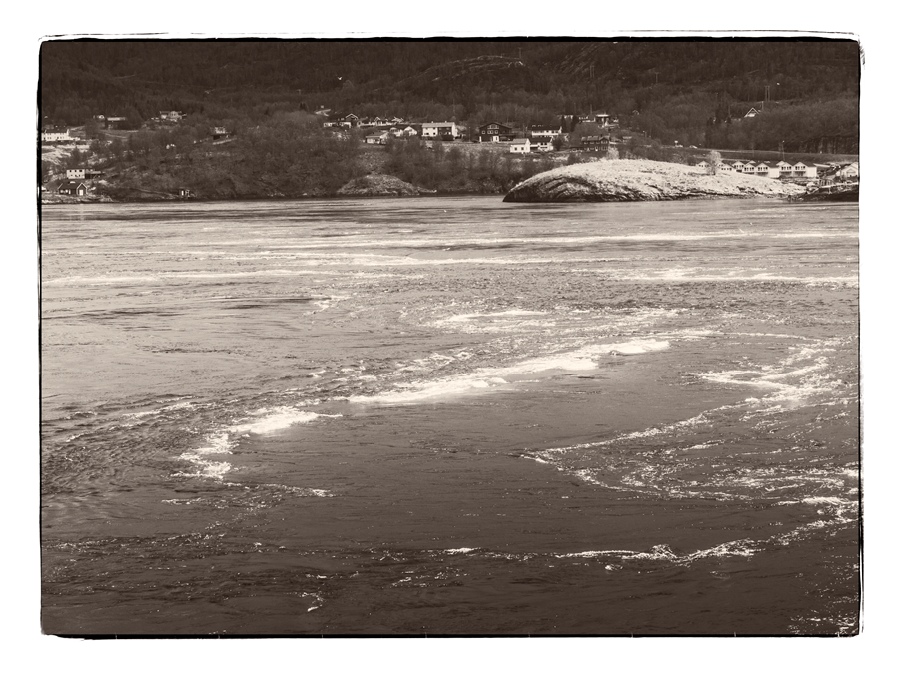
Just outside Bodo is Saltstaumen, the maelstrom. A force of fierce nature created when the waters of Saltforden and Skjerstad Fjord push through the narrow opening between the islands of Straumoya and Knaplundsoya.
Edgar Allan Poe describes the experience of his hero in ‘Descent into the Maelstrom’ just offshore from where we stood ….
“Never shall I forget the sensations of awe, horror, and admiration with which I gazed about me. The boat appeared to be hanging, as if by magic, midway down, upon the interior surface of a funnel vast in circumference, prodigious in depth, and whose perfectly smooth sides might have been mistaken for ebony, but for the bewildering rapidity with which they spun around, and for the gleaming and ghastly radiance they shot forth, as the rays of the full moon, from that circular rift amid the clouds which I have already described, streamed in a flood of golden glory along the black walls, and far away down into the inmost recesses of the abyss.”
And Herman Melville throws Saltsraumen into the mix of the world’s difficulties and perils which he would overcome in pursuit of his whale.
“Aye, aye! And I’ll chase him round Good Hope and round the Horne, and round the Norwegian Maelstrom, and round perdition’s flames before I give him up.”
And what did we find?

001 copy6

Kattegat and Skagerrak, seas with different densities meet with an even greater density of human tourists who take turns to stand on the sand of the sharp Grenan point to photograph themselves in front of a slight disturbance in the water behind them.

001 copy7

001 copy4

There is a discernible straight line between the seas and on a good day I reckon it would be spectacular. On the day we visited I looked around for whatever straight lines I could find.

001 copy3

001 copy2

001 copy

At the maelstrom, no whales, no imperilled sailors but a few fishermen with rods and lines and a few hopeful tourists like us clinging to the tourist information tide tables in case they flew into the biting wind into the freezing air under the bridge and into the current sketched on the surface of the water by small waves.

001 copy1

But what a fantastic experience, to be able to feel those words in your mouth and imagine.
Kattegat, Skagerrak, Saltstraumen, Maelstrom, Saltforden, Skjerstad, Straumoya, Knaplundsoya.
Posted in Memory, Photography | Tagged , , | Leave a comment

A photographic combination.

For many many years I have made hundreds of photographs which, whilst giving me enormous pleasure, have singularly failed to make me rich and famous.
I look at hundreds of photographs too and, increasingly, I find it difficult to find new and exciting work. We are so much in debt to the great masters of photography that there is little to be seen these days which does not have a reference to some particular style of subject which has already been developed and often, as in the case of the genius Robert Frank, moved on from, leaving his followers making honourable but familiar new work.
I’m in that category I think. My photographs have a style and choice of subject which is recognisable if you are familiar with the work of photographers I revere.
Well, I may have made a breakthrough here. These photographs were made about three years apart, one in western France and the other in northern Denmark. One is a death mask and the other is a camel. So far so obvious.
The thing is that the death mask is Napoleon’s mother and the camel is the very fellow Napoleon  used at the beginning of the Egyptian campaign which, as soon as he was off its back was shot, stuffed and sent back home as a memento.
I know it’s a grand assertion but I truly believe I may be the only photographer on the planet to have made a collected series of photographs featuring Napoleon’s mother and his camel together and I claim this as a unique event in photographic history.
Posted in Photography | Tagged , , | Leave a comment

Holiday Snaps

Tollund Man-1

In 1969/70 I lived and worked in a crafts community at the edge of Durness in Sutherland on the North coast of Scotland. I lived with the family of David and Lotte Illingworth at the community which still exists and is called Balnakiel. Lotte, who has reverted to her maiden name, Glob, still works nearby making beautiful sculptural ceramic pieces.
Lotte’s father was P.V. Glob an archaeologist who was Director of the National Museum in Copenhagen and Director General of Museums and Antiquities for the state of Denmark. It was in this capacity that P.V. Glob made his investigations into the life and death of Tollund Man, the perfectly preserved remains of an individual from the Iron Age found in a Danish peat bog in 1950.
Living alongside and talking with these remarkable people had a profound effect on this 20 year old naive young man and shaped much of what I still think of as among the most important things. The sense of David Illingworth’s precision and creative energy. The organic nature of Lotte’s vision and the force of her workmanship. The excitement of P.V. Glob’s investigations and how they brought the past to life.  The fact that people could live lives which were of their own choosing in places which many others might consider hostile environments was new to me.
We had many conversations about Tollund Man and the other remains which the bogs released over the years and I read Glob’s fabulous book, “The Bog People” like a detective story. I must have said over and over that I would one day visit Silkeborg, where the remains were discovered, and see Tollund Man for myself.
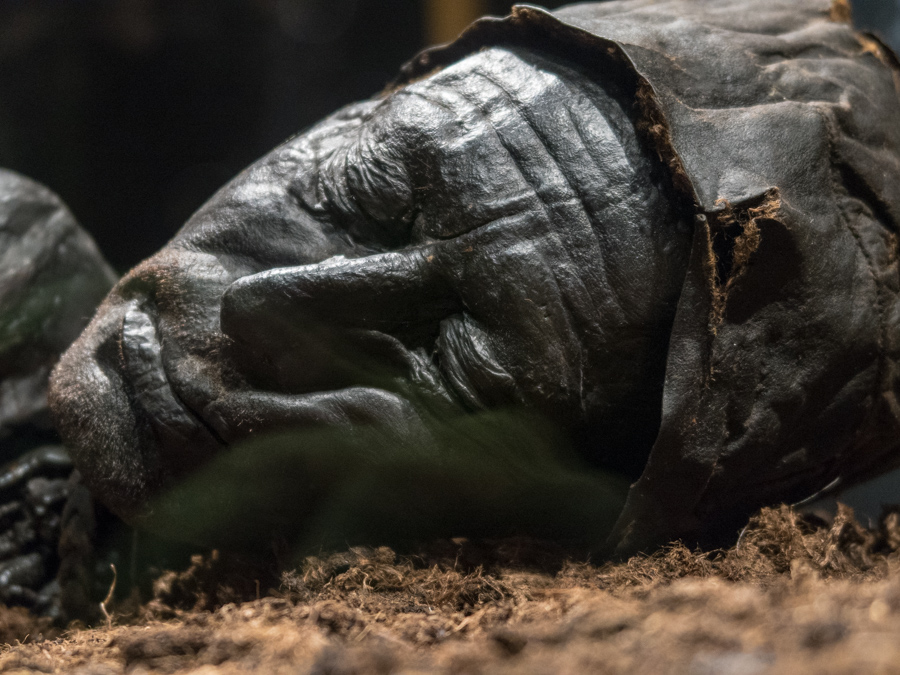
It has taken very nearly 50 years to make that visit but we did finally get to meet this remarkable and enigmatic chap and make a portrait photograph.
He is in a room all by himself in Silkeborg Museum. Each wrinkle and mark on the skin of his face is perfectly preserved along with a light spread of distinct ginger stubble on his chin. On his head is a leather cap stitched and sown well over 2000 years ago and placed on his head at the time of his mysterious death. A knotted cord of woven hide strips forms a noose around his neck and this had been used to hang him.
It is possible that he had once been a high ranking individual sacrificed to whatever powers controlled the harvest and climate and made life possible for those hard pressed people. That his death might have been judicial rather than ceremonial can’t be discounted but it is a strange thing that when you discuss these matters in his presence you get a very strong sense of being a little transgressive. What if he’s listening? This is no skull or mummy. This is a real, gentle human face just like those we spend our days with.
We spent quite a lot of time with Tollund Man and then had cake and left Silkeborg. But before we were out of the building the ticket seller at the door, having recognised our sad attempt at asking for entrance in pathetic Danish as English had found the entry Seamus Heaney  had made in the museum visitors book. He confided in us that if Heaney had gone to Aarhus to see this peat-brown head he would have missed Tollund Man by about 50 miles.
I
Some day I will go to Aarhus
To see his peat-brown head,
The mild pods of his eye-lids,
His pointed skin cap.
In the flat country near by
Where they dug him out,
His last gruel of winter seeds
Caked in his stomach,
Naked except for
The cap, noose and girdle,
I will stand a long time.
Bridegroom to the goddess,
She tightened her torc on him
And opened her fen,
Those dark juices working
Him to a saint’s kept body,
Trove of the turfcutters’
Honeycombed workings.
Now his stained face
Reposes at Aarhus.
II
I could risk blasphemy,
Consecrate the cauldron bog
Our holy ground and pray
Him to make germinate
The scattered, ambushed
Flesh of labourers,
Stockinged corpses
Laid out in the farmyards,
Tell-tale skin and teeth
Flecking the sleepers
Of four young brothers, trailed
For miles along the lines.
III
Something of his sad freedom
As he rode the tumbril
Should come to me, driving,
Saying the names
Tollund, Grauballe, Nebelgard,
Watching the pointing hands
Of country people,
Not knowing their tongue.
Out here in Jutland
In the old man-killing parishes
I will feel lost,
Unhappy and at home.
 

Posted in Memory, Photography | Tagged , , , , | Leave a comment